Politics in 2020

Showing posts with label political debate. Show all posts
Showing posts with label political debate. Show all posts
Friday, October 02, 2020


Tuesday, April 04, 2017
The Disappeared-In-America Immigration System
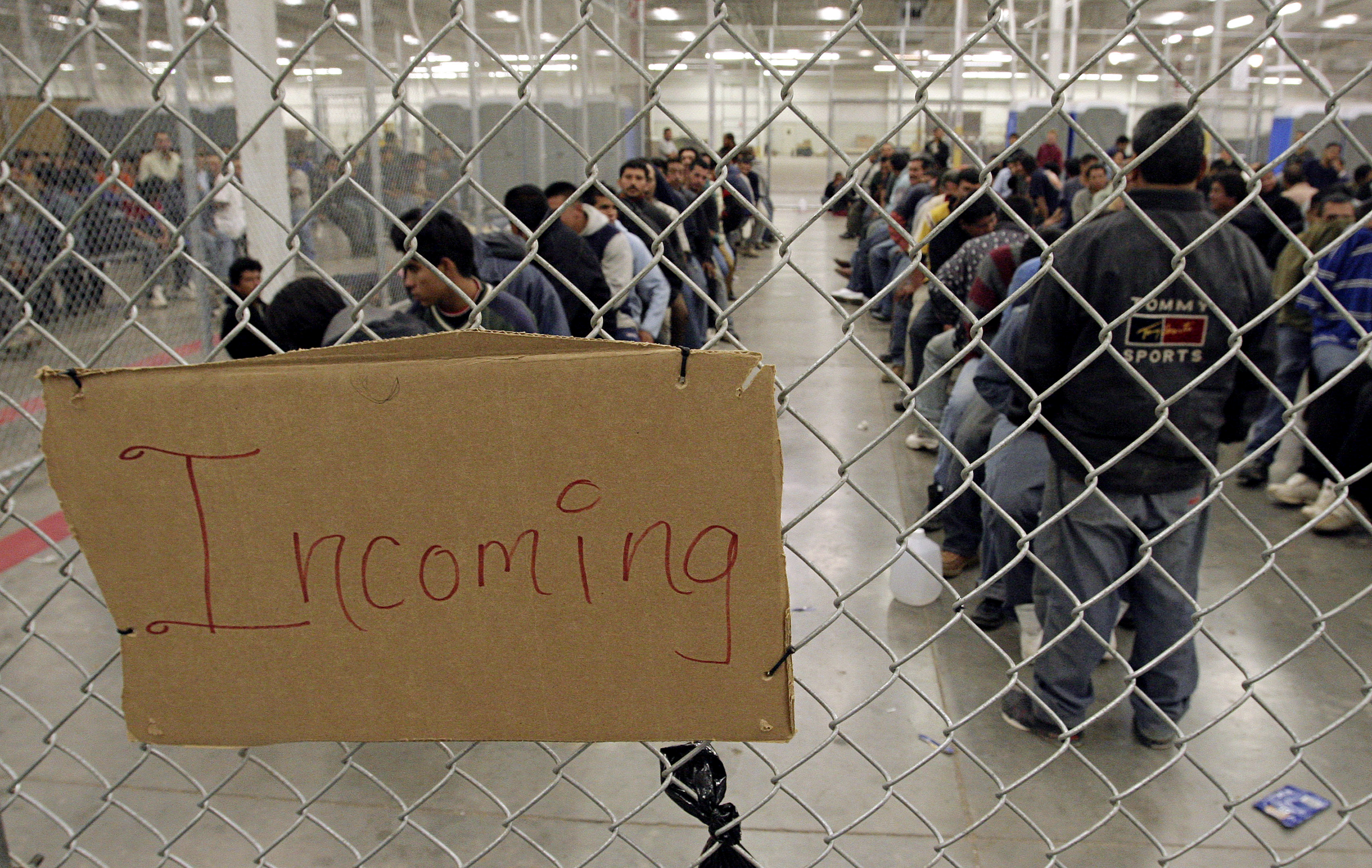
You can read this article and you can not believe it, or not believe it, you can call it a generalization, or call it an abomination. Yet, dear reader, your opinion about this story and the people in it does not matter. Many others will be treated like the individual in this story, no matter who you share this story with or how much you might not want to even believe it or protest against it.
That's because right now, a loud chunk of the voting public and the elected leaders hate immigrants. Voters don't actively hate them, they do it passively . Elected leaders are, however, very actively drafting and enforcing policies which are beyond cruel and abusive. Everyone, of course, can just call this system inadvertently harsh and brutal. And do nothing about it.
So why am I posting this? As with so very many posts here - it is something I do for myself. I post this because I do not want to be part of such a system. I have many friends who are terrified to be even near the edges of our current war on immigrants. I post it because I have this awareness, this slim bit of knowledge added to what is already known.
Anyone (typically not white) can be taken by ICE agents, and as a their detainee, you have no right to call anyone, no visitors, nor right to counsel though the detainee can hire one if he/she fills out the proper paperwork, that is if they can read and write English, and in the meantime ICE can move you from prison to prison, no outside contact, no hearings, no pleas, no time limit on how long you can be held so they just wait for the detainee to wear down and sign a voluntary deportation order.
"Locking up accused criminals indefinitely is a tried-and-true way of getting them to plead guilty, whether they actually committed a crime or not. The same principle applies to immigration detainees. And criminal defendants, even those accused of the worst crimes imaginable, don’t get sent to three different states in a two-month period as part of their pretrial detention."
Thursday, March 09, 2017
Artists Are All Loser Slackers, Says Lying Media Outlet

I avoid reading the thin drool offered on the PJMedia website but I happened to read the opinion piece recently offered by a failed artist now church employee who demands the National Endowment for the Arts be totally eliminated
The writer trots out withered, ancient and fake narratives which ignore the reality of what the NEA does and how it does it. The writer wails that crazy commie leftist artists suck up tax dollars to insult you with lousy arty stuff no one needs 'cause art ain't food; another false claim is that all art should be regulated by a free market and therefore insure only good art that everyone likes will survive and crappy art will die; and finally that "all Americans' don't have any creative notions so no creative notion should be supported.
The facts are enormously and utterly at odds with such drivel.
"The NEA’s 2017 budget is $149.8 million. In a nation of 319 million people that amount doesn’t allow the agency to subsidize much of anything. But the endowment has found ways to make the money work with outsized effectiveness and efficiency. It makes thousands of small grants to nonprofit organizations — on average 2,100 a year. Each grant requires the recipient to raise matching local funds — often at a ratio of two or three local dollars for each federal one. So the NEA mostly serves as a catalyst for local groups to raise private and state money to serve their own communities.
On its modest budget, NEA funding now reaches every state, every congressional district, and even most counties — rural and urban — in the United States. Grants fund programs in schools, libraries and military bases. Nearly half the grants go directly to state and regional arts organizations to expand grass-roots efforts. NEA grants never pay overhead or annual expenses. They only fund specific programs of artistic and educational excellence that reach the public."
--
"The arts in America wouldn’t be destroyed if the NEA ceased to exist. But music, dance, theater, literature and visual arts would become less widely available, especially in schools, rural areas and poorer communities. Access to culture should not be a function of family income. That is why citizens should remind their representatives in Washington that the NEA needs to be protected. Believe it or not, most members of Congress will be pleased to get these letters.
Public support for the arts and arts education is neither a partisan nor a divisive issue. Most Americans want to see the arts in their communities and their schools. Most members of Congress agree. So do most governors and state legislatures. A 2016 public opinion poll conducted by the advocacy group Americans for the Arts found that 55% were in favor of doubling the NEA’s budget (from 46 cents per person then to $1 per person)."
Truth - eliminating the tiny amount of the NEA budget resolves no issue and addresses no problem. So why push for it?
I find it fascinating the writer from PJM is employed by a religious organization, which is exempt from paying taxes - if the writer were truly concerned about fair tax policies, shouldn't he argue that religious organizations should be taxed? So it isn't a tax issue or an economics issue - it's a cultural control issue. It also perpetuates hateful, demeaning, false and ignorant views about anyone who works in the arts - as the article's writer asks, "why should my tax dollars pay for your slacker son to be in a play when if had any talent he would not need any support to reach the heights of success and fame and wealth'.
A few million dollars supporting tens of thousands of arts programs is bad. Billions to subsidize oil companies or banking is good. Only art that is bought is good. The crap you make in your own community is crap, go get a real job, slacker.
The Republican party continues to show it opposes collaboration, open dialog, education, a free press, or anything which provides opportunities for the poor, for rural residents, for schools. Every argument about the arts they offer is debunked but they continue to lie and distort reality - the real problem, they say, is your sin of not being wealthy. Art is for the wealthy and talented - your creative contribution is a laughable pile of crap.
And, as usual, those ideas are held only by a small, angry, petty crowd of deplorable clucks who have a warped view of the world. They simply lust for power for it's own sake while claiming to be your Protectors.
Tuesday, September 27, 2016
What I Learned Watching The Presidential Debate

Let's see here ... the United States should
= Invade North Korea
= Or at least support a Chinese invasion of North Korea
= Stop US business expansion into overseas market
= Abandon NATO
= Support the collapse of the US housing market because "that's called business".
OK, what else do we have here? It strikes me how much Trump talks like a character in a David Mamet con man play ... like this one about his own income:
"The report that said $650 (million) — which, by the way, a lot of friends of mine that know my business say, boy, that’s really not a lot of money. It’s not a lot of money relative to what I had.
The buildings that were in question, they said in the same report, which was — actually, it wasn’t even a bad story, to be honest with you, but the buildings are worth $3.9 billion. And the $650 isn’t even on that. But it’s not $650. It’s much less than that.
But I could give you a list of banks, I would — if that would help you, I would give you a list of banks. These are very fine institutions, very fine banks. I could do that very quickly."
I did like this quote from Clinton, which was pretty much overlooked, but really cuts to the heart of what Trump himself considers his ultimate expertise, cutting business deals:
"Well, sometimes there’s not a direct transfer of skills from business to government, but sometimes what happened in business would be really bad for government."
There's the blatantly obvious racism from Trump, however I am sure he sees his comments differently, such as he calls anyone he thinks is a bum whatever slur comes to mind.
Overall, I learned that I remain perplexed at how some thoughtful and experienced people I know are ardent supporters for someone who is playing a dangerous game he has zero qualifications for.
Overall, I learned that I remain perplexed at how some thoughtful and experienced people I know are ardent supporters for someone who is playing a dangerous game he has zero qualifications for.
Monday, March 07, 2016
Where's My Cup of Joe?

Apologies again, Dear Reader and Humble Blog, for an extended absence. It's a dual whammy from being very busy working and utterly stunned by the depth of stupid in the political world.
Truly does any comment actually need to be made about the idiocy on display daily from Republican candidates and office holders who have yet to strike the bottom in their relentless effort to grind all governing to a halt?
Either you know what's up or you've not paid attention and gone dogmatically drunk along with the delusions.
Here, from October last year, my views on the state o' politics
"And the talking is being done by notably unqualified candidates here in the ol' U.S. of A, the sort of talking that cliched tin-pot dictators might spew from tiny podiums and dressed in over-decorated, ill-fitting military uniforms.Such candidates as Trump, Cruz, Carson, Fiorina, Rubio, Bush, and even whole rosters of state GOP candidates are the folks doing such talking today. It's pretty awful to hear and see.
On the Left, Hilary Clinton, even if elected will instantly be tarred with the 'unconstitutional presidency', as these talkers have labeled President Obama. And that would extend the current Insta-Rage crowd's fervor to even more unacceptable and unsustainable behaviors.
And there's Bernie Sanders, who has, for his career, been neither a Republican or a Democrat ...a pretty good indication he's probably the smartest guy in this particular political room of Potentials."
Things haven't changed much, so why repeat myself ad nausueum?
So there's that.
And yes, I have been busy in offline world creating imaginary worlds - directing and producing plays as Artistic Director for Morristown's Theatre Guild and as directing plays as Artistic Director at Lincoln Memorial University. I am beyond thankful to be so busy. The process of group collaborations for the shows I do is likely why I maintain a very positive outlook on our world today. See, people from all walks of life get together, work together and create something unique and special worth sharing.
Currently I'm helping produce a stage version of "Alexander and the Terrible, Horrible, No Good, Very Bad Day" as a schools program for some 1000-plus students and I am directing what I know will be an amazing version of "Alice In Wonderland" at LMU where Wonderland is of a Steampunk reality (or surreality) See, I am a very fortunate person to have such opportunities.
All that being said, I will step up the postings since politically the nation is in the grips of some dangerous folk and it seems more and more voices of reason are required.
I'm here for you - not to point out the obvious - to give volume to those voices.
Here, let me share this (and I encourage you to check out KnoxViews often) - it indicates how any voice other than one is being ignored in Tennessee.
"Tennessee Legislature 'Honored' as 'Most Conservative' at CPAC"
Also, read Tom Humphrey to stay up to speed on the Tennessee political landscape:
Marsha Blackburn as Trump's V.P.?
Saturday, January 16, 2016
The Hateful 8: American Politics 2016

The Hateful Eight will eventually be classified as one of director Tarantino's most outspoken political movies (even more than the one where his characters kill Hitler, which is more Grindhouse than political).
Like the sprawling views of the American political landscape in 2016, Tarantino goes as big as the camera allows, in 70 mm, and within the frame the characters are all deeply paranoid about one another, they all feel stuck, alone, confined, they have hidden agendas which have devastating consequences, and there's the visceral hatreds about race and then there's this letter from President Lincoln which is a herald for legitimacy and high-minded democracy. And much of what is rolled out - from characters to plot points - are all rather sketchy on the truth. It's like a pack of arguing Facebook commenters trapped in a room.
Women are bashed even more just for being in the conversation, worse if they speak. The way she is treated, the effort made by each of the characters to describe themselves via their roles in the social order, aren't really made to create comfort in viewers - the opposite in fact - we question everyone too. The status quo is up for grabs, a newer America is emerging.
Walter Goggins' character Mannix is, as he describes it, the one person in the group who is moving with the changing times and seeking his own answers:
" ... if you look at the course of that dialogue and the way he constructed that scene and how Mannix leans in and pulls back, he gets extremely aggressive and extremely passive. Mannix ends it with this vitriolic, defensive posture for his father and the institutions for the South and what the South stands for, and then Marquis pulls out his gun and Mannix says, “[Puts on the character’s voice] Oh, no, no, no, you got me talking politics.”
---
"Mannix is constantly shifting. He’s a real interesting guy in an arrested state of development, and you feel that in the stage coach. Everything that comes out of his mouth, at least for me, is regurgitating a worldview he got from his father and the people around him. None of those thoughts are his own, because he’s not a man; he doesn’t have the ability to think for himself until later in the movie. It all starts in that carriage scene, man.
(One non-political realization from the movie - almost each time two people speak together, someone is gonna get killed.And even if not, that possibility haunts one-on-one conversation.)
Oh and no one really emerges well from the political swamp they are in - not much to be solved locked into this particular space and time, everyone is asking the wrong questions or not enough of the right ones.
It's a pretty damning social commentary. told like a Western yarn spun round the campfire.And yet, ever the cultural compiler in cinema, Tarantino also builds this tale through the tropes of a Mystery, a sort of Locked Room whodunnit. And that too underpins the political commentary - so many unknowns when living in such a paranoid world.
Here's a fascinating roundtable talk with Tarantino, Ridley Scott, David O. Russell, and other top directors talking about filmmaking - great stuff.
Here's a terrific interview with Jennifer Jason Leigh on DP/30's YouTube page, and he's got more with the whole cast.
Friday, December 11, 2015
It's Christmas So -- Guns!

The words "gun control" are all around us this holiday season, but the real debate here is about reducing massacres of innocent folks by heavily armed villains. But getting past the easy slogans about weapons is tough - that's why slogans work.
New Yorker writer Adam Gopnik tackles and exposes the many factual, real errors in the prevailing slogans in this essay. Some excerpts: (And be sure to read my NOTE below) --
"Gun laws solve nothing because terrorists, whether in Paris or San Bernardino, aren’t the sort of people who care about or obey them.This might properly be restated as follows: if a pickpocket steals your wallet on the bus, repeal the laws against pickpockets. If terrorists and criminals do still get guns, despite existing gun laws, there is no reason to have gun laws at all. But the goal of good social legislation is not to create impermeable dams that will stop every possible bad behavior; it is to put obstacles in their way. The imperfection of a system of restraints is an argument about the imperfection of all human systems. It is not an argument against restraints. What’s more, the special insight of recent criminology is to show that low walls work nearly as well as high ones, and are obviously much easier to build. Making any crime harder usually makes it much harder. If the terrorists in San Bernardino had had to work as hard at building guns as they did at building bombs, perhaps the guns would have worked as badly as the bombs did."
---
"There are already so many guns in circulation in the United States, and their owners are so determined to keep them, that introducing limits would have no practical effect. ... Piecemeal social reform tends to be slow, but it tends to be successful. (Many manageable middle-range changes, from ammunition control to “smarter” and more secure guns, have been suggested as passable paths to gun sanity.) One need look only at the history of smoking or of car safety to see that this is so. Cancer caused by cigarettes and deaths caused by traffic fatalities, which were once fixed and ubiquitous features of American life, have been vastly reduced by gradual reform."
---
"Even if gun control were a good thing, the Second Amendment renders its achievement impossible. ... Does anyone believe that Madison and Mason, stumbling into the first-grade classroom where modern assault weaponry had blown apart twenty six-year-olds and six of their terrified caretakers, would then say, “Well, too bad—but, yes, that’sexactly what we meant by the right of the people to keep and bear arms”?"
NOTE: Whether guns or other ills which bring problems, I'm on the side of seeking solutions rather than giving up on any useful resolution. Problems have solutions. I endorse the right to keep and bear arms - it is a basic right. Reducing mass murder is the goal, as is public safety. Whipping up hysteria and rage at the mere thought of discussing this issue, framing such discussion as open warfare, is dangerous and pointless. We don't live in a cartoon.
Merry Christmas.
Monday, September 29, 2014
The Only Real Political Debate?
While the media and the current political party debate seems to indicate a battle between "Conservative" and "Liberal" factions, that is not the reality.
 The ideas are nicely captured in this review via The Film Doctor, who mingles writing about politics and the art of cinema in a most unusual fashion. While her book seems to center on the debate about Climate Change, there is much more underneath.
The real conflict is much more deeply embedded in the way most everyone lives and dies, and simple solutions or moral authority just don't exist. The working world, from farming and food to high technology, is critically flawed - so goes the argument laid out in Naomi Klein's new book. "This Changes Everything". We are doomed to extinction at a planetary level unless momentous revisions to how we live take place.

"One thing is certain: Klein's book has a clear villain--the oil companies. As she writes, "From the perspective of a fossil fuel company, going after these high-risk carbon deposits is not a matter of choice--it is its fiduciary responsibility to shareholders . . . yet fulfilling that fiduciary responsibility guarantees that the planet will cook" (148). Her observation had me wondering about how much do we individually and habitually consume petroleum-based products, and how easy would it be for anyone to switch over to only using renewable energy? When I get up in the morning, I drink coffee from Colombia, brush my teeth with a plastic toothbrush, drive to work in a car, work in air conditioning, eat food that has travelled great distances, buy a book, etc. The thought of how I might begin to cut back on this enhanced life style proves daunting given how just about every aspect of it ties in with the premise of having cheap abundant fossil fuel. ... our way of life is so energy-intensive in the United States that it seems nearly impossible to fundamentally change that addiction within 30 years before nature finds another way to take care of the problem. The challenge seems so insurmountably great, Klein's solutions can take on a Pollyanna quality of dreamy wish-fulfillment. Klein anticipates that critique by reasserting that the climate allows us no choice but to think and act in radically different ways.
"I especially liked Klein's history of the small island of Nauru, a cautionary tale that reads like Jared Diamond's description of Easter Island in his 2011 bookCollapse: How Societies Choose to Fail or Succeed. ... And we tell ourselves all kinds of similarly implausible no-consequences stories all of the time, about how we can ravage the world and suffer no adverse effects. Indeed we are always surprised when it works out otherwise. We extract and do not replenish and wonder why the fish have disappeared and the soil requires ever more 'inputs' (like phosphate) to stay fertile. We occupy countries and arm their militias and then wonder why they hate us. We drive down wages, ship jobs overseas, destroy worker protections, hollow out local economies, then wonder why people can't afford to shop as much as they used to. We offer those failed shoppers subprime mortgages instead of steady jobs and then wonder why no one foresaw that a system built on bad debts would collapse."
"I especially liked Klein's history of the small island of Nauru, a cautionary tale that reads like Jared Diamond's description of Easter Island in his 2011 bookCollapse: How Societies Choose to Fail or Succeed. ... And we tell ourselves all kinds of similarly implausible no-consequences stories all of the time, about how we can ravage the world and suffer no adverse effects. Indeed we are always surprised when it works out otherwise. We extract and do not replenish and wonder why the fish have disappeared and the soil requires ever more 'inputs' (like phosphate) to stay fertile. We occupy countries and arm their militias and then wonder why they hate us. We drive down wages, ship jobs overseas, destroy worker protections, hollow out local economies, then wonder why people can't afford to shop as much as they used to. We offer those failed shoppers subprime mortgages instead of steady jobs and then wonder why no one foresaw that a system built on bad debts would collapse."
"At every stage our actions are marked by a lack of respect for the powers we are unleashing--a certainty, or at least a hope, that the nature we have turned to garbage, and the people we have treated like garbage, will not come back to haunt us" (165-6). As Klein concludes, "In other words, Nauru isn't the only one digging itself to death; we all are" (168). "
Wednesday, October 02, 2013
Carrying Guns OK, But Chickens Outlawed

In Appleton, WI, it is legal to carry guns in public, but carry around a chicken and you will be fined.
Thursday, March 07, 2013
Sen. Rand Paul Ignores 30 U.S. States Wanting Drones of their Own

Some faux drama brought out by Sen. Rand Paul wailing about the use of surveillance or armed drones ignored a basic fact - U.S. states want their own drone systems. That includes Tennessee.
"It's a race to see which state will be the first to pass legislation governing domestic drone use. Coming out of the gate first was Florida, which passed a bill through several committees in the Senate back in January. This is notable since the Florida legislature didn’t officially convene until March 5—they thought this issue was so important that they moved the bill during their committee organizing sessions. Then Montana pulled up from behind, passing two drones bills all the way through their Senate by mid-February. But, Virginia raced ahead, sending two bills to their governor’s desk by the beginning of March, where they currently await signature.
"Drone legislation has been proposed in at least 30 states so far. As part of my job working with ACLU affiliates nationwide to analyze and respond to the various proposals, I have read every single one of these bills, and I thought it would be useful to summarize what we’re seeing in this legislation.
The good news is that the vast majority of the bills require a probable cause warrant in order for law enforcement to use drones to collect information to use against someone in court."
The status of all such legislative action is here.
As for Sen. Paul, given that the Senate and House cannot even agree on creating the basic budgetary needs of the nation, perhaps other issues should prompt filibusters first.
Monday, December 17, 2012
Mass Murder, Guns and Americans
 |
| The Misunderstood? (via) |
In the face of deadly events and violence aimed at children, it seems the most sane response is the expressed desire for it to never happen again. Prevention is far more difficult a task than most might imagine. The causes and cures aren't easy. But as so many have said in the last few days, it's a grim task but we must attempt to rise to it's challenges, to discuss a myriad of problems and solutions with a goal of improving our world.
I offer a few links to explore below.
-- As recently as August of this year, residents in Newtown debated adding restrictions to the growth of shooting ranges in their town. Complaints were growing as many of the ranges began loading shooting targets with Tannerite, which can create large explosions when struck by high velocity ammo:
"Something needs to be done,” said Joel T. Faxon, a hunter and a member
of the town’s police commission, who championed the shooting
restrictions. “These are not normal guns, that people need. These are
guns for an arsenal, and you get lunatics like this guy who goes into a
school fully armed and protected to take return fire. We live in a town,
not in a war.
"I’ve hunted for many years, but the police department was getting
complaints of shooting in the morning, in the evening, and of people
shooting at propane gas tanks just to see them explode,” Mr. Faxon said."
One of the nation's largest political lobbying groups for gun ownership, the National Sport Shooting Foundation located just a few miles away from the Sandy Hook Elementary School in Newton, sent a spokesperson to the city council debates on restrictions. He said:
"Among the speakers was a representative of the National Shooting Sports
Foundation, who was described as saying he believed there was a greater
danger of swimming accidents. “No privileges should be taken away from
another generation,” he said. "No safety concerns exist"
-- Those who call for more guns as a problem-solver, as an expression of liberty and freedom are making a critically flawed argument. An opinion piece by Firmin DeBrabander provides this viewpoint:
"This becomes clear if only you pry a little more deeply into the
N.R.A.’s logic behind an armed society. An armed society is polite, by
their thinking, precisely because guns would compel everyone to tamp
down eccentric behavior, and refrain from actions that might seem
threatening. The suggestion is that guns liberally interspersed
throughout society would cause us all to walk gingerly — not make any
sudden, unexpected moves — and watch what we say, how we act, whom we
might offend.
"As our Constitution provides, however, liberty
entails precisely the freedom to be reckless, within limits, also the
freedom to insult and offend as the case may be. The Supreme Court has
repeatedly upheld our right to experiment in offensive language and
ideas, and in some cases, offensive action and speech. Such
experimentation is inherent to our freedom as such. But guns by their
nature do not mix with this experiment — they don’t mix with taking
offense. They are combustible ingredients in assembly and speech."
Both in Newtown and earlier this year in Aurora, CO, the killers used a semi-automatic weapon, variants of the AR-15. In Aurora, the killer used a Smith &Wesson M&P 15-22 model of this rifle, outfitted with a 100-round drum magazine. The American Rifleman magazine writes of this military-styled weapon this way:
"It has many of the features of a tricked-out AR tactical rifle, but is
light enough for easy all-day carry on small game hunts for squirrels,
rabbits or prairie dogs. It's also really fun to shoot in informal
training exercises in an attempt to get to know this tactical-looking
.22 rifle.
"The M&P 15-22 pointed easily and with its 25-round magazine, chewed
through ammunition. It was so easy to send multiple rounds downrange
that one shot just never seemed enough."
Thursday, December 13, 2012
The Republican Delusions on Economic Policy

Surveys say:
"President Barack Obama won the public argument over taxes so
decisively that almost half of Republicans now say he has an election
mandate to raise rates on the rich.
"Majorities of about 2-to-1 also read the election results as
an endorsement of Obama’s pledge to protect Social Security and
Medicare benefits, according to a Bloomberg National Poll of 1,000
adults conducted Dec. 7-10." (via)
----
"A Wall Street Journal-NBC News poll released late on Wednesday,
however, held the potential to shake up the stalemate. Three-quarters
of those surveyed, including 61 percent of Republicans, said they would
accept raising taxes on the wealthy to avoid the so-called cliff, as
Democratic President Barack Obama is demanding.
With
Republicans in Congress already divided, that rejection by their own
supporters of the core demand of Republican House of Representatives
Speaker John Boehner could further weaken his position." (via)
----
Meanwhile, the Republican delusions are growing:
"Boehner said when he saw the election results in November, he conceded
that he and the Republicans would have to be willing to allow some tax
increases for wealthy Americans in conjunction with deep spending cuts
on entitlement programs. But the president, he said, is being a bully on
cliff negotiations. "I think when they won the election, they must have
forgotten that Republicans continue to hold a majority in the House,"
he said. "The president's idea of a negotiation is 'roll over and do
what I ask.'" (via)
---
Thursday, June 28, 2012
Today's Court Ruling on Heath Care and What It Means

UPDATE: Much surprise that the Supreme Court has upheld that the Affordable Care Act. Chief Justice Roberts and the majority of the court agrees that the law is indeed constitutional - much to the surprise of many court followers and those who have opposed President Obama, it's a clear win for his policies -- from the SCOTUS blog:
"In Plain English: The Affordable Care Act, including its individual mandate that virtually all Americans buy health insurance, is constitutional. There were not five votes to uphold it on the ground that Congress could use its power to regulate commerce between the states to require everyone to buy health insurance. However, five Justices agreed that the penalty that someone must pay if he refuses to buy insurance is a kind of tax that Congress can impose using its taxing power. That is all that matters. Because the mandate survives, the Court did not need to decide what other parts of the statute were constitutional, except for a provision that required states to comply with new eligibility requirements for Medicaid or risk losing their funding. On that question, the Court held that the provision is constitutional as long as states would only lose new funds if they didn't comply with the new requirements, rather than all of their funding."
original post follows below ...
---
Today, some people are hoping the Supreme Court effectively ends the presidency of Barack Obama by ruling his health care law unconstitutional and thus rejecting a centerpiece of his first term in office. It's the culmination of a fierce and dedicated attempt to discredit and dismiss Obama from the political world, and this effort really has no concern about that status of health care in America.
"In Plain English: The Affordable Care Act, including its individual mandate that virtually all Americans buy health insurance, is constitutional. There were not five votes to uphold it on the ground that Congress could use its power to regulate commerce between the states to require everyone to buy health insurance. However, five Justices agreed that the penalty that someone must pay if he refuses to buy insurance is a kind of tax that Congress can impose using its taxing power. That is all that matters. Because the mandate survives, the Court did not need to decide what other parts of the statute were constitutional, except for a provision that required states to comply with new eligibility requirements for Medicaid or risk losing their funding. On that question, the Court held that the provision is constitutional as long as states would only lose new funds if they didn't comply with the new requirements, rather than all of their funding."
original post follows below ...
---
Today, some people are hoping the Supreme Court effectively ends the presidency of Barack Obama by ruling his health care law unconstitutional and thus rejecting a centerpiece of his first term in office. It's the culmination of a fierce and dedicated attempt to discredit and dismiss Obama from the political world, and this effort really has no concern about that status of health care in America.
Some have framed the entire discussion about reforming the way we pay for and receive health care as a debate over President Obama's worth as the nation's leader. They have worked so very, very hard to disguise the decades-old problems of affordable health care as some horrible governmental monster.
Court watchers all claim there are four key issues on which the court today will issue it's decision - the media meanwhile has bought into the narrative that this is a do-or-die game akin to a run for the final playoffs in the upcoming presidential election.
What I deeply dislike is the eagerness to ignore the realities of a for-profit health care system, a fatally flawed system where so many simply cannot afford basic medical care. There is little interest in providing such care to those who need it, even though we claim to have the finest medical care in the world ... if you can pay for it. Indeed, such folks who oppose reform laws embrace the notion that if you cannot afford it, that also proves something about your worth (or lack of it) as a citizen.
I don't expect the court will back the president today - Conservatives would knock anything and anyone down in their blind ambition to prevent any change to the status quo and to marginalize any idea from this president. In the eyes of some, the issue is not that our nation has citizens who can't receive medical care - and the cure for that delusion remains elusive.
Thursday, February 09, 2012
Birth Control as Political Theatre
I try not to be too surprised/disappointed by the ridiculous rants which pop up in American politics - history shows us absurdity often holds momentary sway. But I was surprised/disappointed when I began reading the hysterical wails about contraception and if it should be covered by health insurance (conversely, I seldom hear complaints about Viagra being covered by health insurance).
The contraception debate is rather old (Congress passed the Comstock Law in 1873 to criminalize birth control) - it roiled up in the 1960s to hysterical levels too - movies, television, books, news companies all provided endless worrying and satire about The Pill, all while sales and usage skyrocketed. Pill protest rallies, support rallies and more swirled and faded since personal control over whether or not to become pregnant should so obviously remain a personal decision. End of debate ... until recently.
While I began pondering how best to explain this idiocy, the always reliable Southern Beale sums it up really well:
"America’s Goofy Other Party is desperate to attack the Obama
Administration on something — anything. With the economy improving and
Osama bin Laden at the bottom of the ocean, what have they got? Culture
wars, of course."
And after providing information about how Catholics already allow for coverage via insurance for birth control, SB adds:
" ... let’s be honest here: most American Catholics use birth control. Sorry,
church leaders can whine about it and complain about it but we all know
it’s true. They lost this battle somewhere around 1977 and I’m just not
going to get dragged into some church battle that the leadership lost 30
years ago."
And she winds up with:
"What the Catholic bishops are trying to do is get the federal government
to enforce the church’s anti-contraception doctrine because they have
failed to do so on their own. This isn’t an “assault on religious
liberty,” it’s the exact opposite: it’s getting the government to
enforce a church rule that no one has followed in decades."
So just read her post, end of debate.
Sunday, October 09, 2011
Occupy Wall Street Protest Grows
A brief look at
some images and descriptions of the Occupy Wall Street protests -
solidarity with these protests are taking place in towns and cities all
over America. (Be sure to read this report from Knoxville's event.)


Monday, September 19, 2011
Rating Obama: Don't Get Fooled

Only a Democrat would face re-election doubts after successfully tracking down and killing Osama bin Laden.
President Obama, it seems, was viewed by some as possessing a magic wand to correct all the massive mistakes from the previous 10 years of Republican-led governing. It is good to see the public at large knows where the trouble lies - in Congress, which gets a 12% approval rating. Still, some rail against Obama, who rates at least 43% approval. Guess which story gets more attention?
Some say he's done little to nothing to change Washington or its policies. Here's a brief look at some accomplishments.
* American job creation is better now than when Bush left office.
* American economic growth is better now than when Bush left office.
* Al Qaeda is dramatically weaker now than when Bush left office.
* The American automotive industry is vastly stronger now than when Bush left office.
* The struggle for equality of the LGBT community is vastly better now than when Bush left office.
* The U.S. health care system is better and more accessible than when Bush left office.
* The federal budget deficit is better now than when Bush left office.
* The major Wall Street indexes and corporate profits are better now than when Bush left office.
* International respect for the United States is better now than when Bush left office.
In truth, I want more things changed - close that Guantanamo prison, end the wars, enhance the much-needed restructuring overseas and at home for roads and schools and business. So much needs repairing in the US - from roads to the economy to basic civil liberties - that indeed just negativity is swaying voters.
Negativity gorges itself in hard times.
Mostly, it seems closed minds, petty revenge tactics and election dreams from Republicans and Tea Party folk, all continue to hold America in a static and losing position.
And as always, Americans most often forget that the decisions made at the state and local level are the ones which determine much of the way we run our education and economic systems. Blaming all ills on one single elected official is juvenile, whether the blame is aimed at a Democrat or Republican. Our job forever remains holding the highest standards of performance and accountability for all our elected officials.
Lately, state leaders in Tennessee and across the country have followed to designs of a single lobbying group, which has the seemingly innocent name of ALEC, to change how Americans vote and where voting districts are. Those changes rise far more from the hopes of getting elected and not serving the citizens:
More on the changes on how you vote here.
Wednesday, September 14, 2011
A Fundamental Difference In The Right and The Left of American Politics
It is an ancient political tactic - the claim a candidate will "bring the Nation back" to something it was but is no more.
I've heard it so often from those on the Right in the last few years, but they are so delusional about what our nation is and was that I have no idea (and neither do they) where or when they want to take anyone to, other than a ride to the polls so the candidate can get elected.
So let me offer a view from the Left, and let's dive deep into the Left
What I like is that the pair of them do not view America or the rest of the world through ludicrous, limited lens of Washington politics and the sputtering media outlets of television and radio.
In a few short sentences, Chomsky nails exactly the status and nature of the political battle in America in 2011:
" ... there’s a more subtle reason why they’re opposed to [Social Security] it, and I think it’s rather similar to the reason for the effort to pretty much dismantle the public education system. Social Security is based on a principle. It’s based on the principle that you care about other people. You care whether the widow across town, a disabled widow, is going to be able to have food to eat. And that’s a notion you have to drive out of people’s heads. The idea of solidarity, sympathy, mutual support, that’s doctrinally dangerous. The preferred doctrines are just care about yourself, don’t care about anyone else. That’s a very good way to trap and control people. And the very idea that we’re in it together, that we care about each other, that we have responsibility for one another, that’s sort of frightening to those who want a society which is dominated by power, authority, wealth, in which people are passive and obedient."
Here's a few more expanded comments from Chomsky on our economic issues-
"The Bush tax cuts were carefully designed so that, at the beginning, everyone got a little, and you had a feeling taxes were being reduced. But they were designed so that, as the 10-year period ended, it was overwhelmingly going to the very rich. Now, the population is strongly opposed to that. You take a look at polls during the lame-duck session, when this was coming up: very strong support for increasing taxes for those with incomes over, say, quarter-million dollars a year. Well, Obama didn’t push that. If he had appealed to the public, they, I think, could have overcome the opposition of the financial institutions, you know, the Republican—the new Republican congressional delegation and so on. But he didn’t even try. And that should be done.
Now, the current proposal goes partially in that direction by indirectly increasing taxes through elimination of deductions. But the tax code simply has to be revised. It’s become highly regressive. In fact, the share of GDP, you know, national income by—of taxes, is probably lower than it’s ever been, far lower than 20 or 30 years ago, particularly for the rich. All of that should be adjusted. There is a stimulus in the program, which is a good idea, but it’s much too small. And the concentration on deficit reduction, when the problem is—the serious problem is massive unemployment, I think that’s a very serious error. You can understand why the banks and insurance companies, and so on, like it, but it’s completely wrong for the—for trying to extricate ourselves from quite a serious economic crisis. The other things are unfortunately—the deficit itself, if you want to take it seriously—I don’t think it’s the major issue, by any means. In fact, I don’t even think it’s a serious issue, at least in the short term. But if you do want to take it seriously, it’s pretty easy to trace it to the roots.
Dean Baker, very good economist, has done—has pointed out, done the calculations which show that if the United States had a healthcare program similar to other industrial countries, which is not a utopian dream, not only would there be no deficit, but there’d be a surplus—that plus the huge military budget. Military budget is probably half the deficit. It’s way out of line with anything needed, certainly for any defensive purpose, but for any justifiable purpose. Ron Paul, who you heard before, was quite right about that. If the military—I mean, the U.S. is spending about as much as the rest of the world combined almost on military spending, technologically very advanced, new destructive techniques developing far beyond what any other country has. This is all—first of all, it shouldn’t be done, on principle, but it also ends up being harmful to us, essentially for the reasons that Paul mentioned. The—and very expensive, of course. That plus the hopelessly dysfunctional healthcare system, those are fundamental problems that have to be addressed."
---
On Social Security;
"Social Security is not in any crisis. I mean, the trust fund alone will fully pay benefits for, I think, another 30 years or so. And after that, taxes will give almost the same benefits. To worry about a possible problem 30 years from now, which can incidentally be fixed with little—a little bit of tampering here and there, as was done in 1983—to worry about that just makes absolutely no sense, unless you’re trying to destroy the program. It’s a very successful program. A large number people rely on it. It doesn’t pay munificently, but it at least keeps people alive, not just retired people, people with disabilities and others. Very low administrative costs, extremely efficient, and no burden on the deficit, doesn’t add to the deficit. The effort to try to present the Social Security program as if it’s a major problem, that’s just a hidden way of trying to undermine and destroy it.
Now, there has been a lot of opposition to it since—you know, since the 1930s, on the part of sectors of extreme wealth and privilege, especially financial capital. They don’t like it, for several reasons. One is the rich don’t barely—for them, it’s meaningless. Anyone with—you know, who’s had a fairly decent income, it’s a tiny addition to your retirement but doesn’t mean much. Another is, if the financial institutions and the insurance companies can get their hands on this huge financial resource—for example, if it’s privatized in some way or vouchers—I mean, that’s a huge bonanza. They’ll have trillions of dollars to play with, the banks, the investment firms and so on.
But I think, myself, that there’s a more subtle reason why they’re opposed to it, and I think it’s rather similar to the reason for the effort to pretty much dismantle the public education system. Social Security is based on a principle. It’s based on the principle that you care about other people. You care whether the widow across town, a disabled widow, is going to be able to have food to eat. And that’s a notion you have to drive out of people’s heads. The idea of solidarity, sympathy, mutual support, that’s doctrinally dangerous. The preferred doctrines are just care about yourself, don’t care about anyone else. That’s a very good way to trap and control people. And the very idea that we’re in it together, that we care about each other, that we have responsibility for one another, that’s sort of frightening to those who want a society which is dominated by power, authority, wealth, in which people are passive and obedient. And I suspect—I don’t know how to measure it exactly, but I think that that’s a considerable part of the drive on the part of small, privileged sectors to undermine a very efficient, very effective system on which a large part of the population relies, actually relies more than ever, because wealth, personal wealth, was very much tied up in the housing market. That was people’s personal wealth. Well, OK, that, quite predictably, totally collapsed. People aren’t destitute by the standards of, say, slums in India or southern Africa, but very—suffering severely. And they have nothing else to rely on, but what they—the, really, pittance that they’re getting from Social Security. To take that away would be just disastrous."
Wednesday, September 07, 2011
Does The GOP Crave A Destroyed America?
A recent essay by recently retired Republican staffer Mike Lofgren, after 30 years serving House and Senate Budget Committees, is stirring up a lot of talk on the internet. It's a deeply damning indictment of what he calls a Republican cult - it's just too bad he only found his voice so late in his career. It makes me wonder if he feared what might follow once he shared his views, perhaps his retirement offers some safety.
His views are similar to many I've shared here, shared by many who have been watching dumbfounded as the screeching, distorted, steady drumbeat of talk from the GOP that their one top goal since 2008 (and even far earlier) has been to insure that any elected Democrat be unable to govern.
That drumbeat has not only been echoed by mainstream media outlets, and likely finds it's way into your email inbox from friends and relatives who simply find the fact that Barack Obama is president is an odious horror - the message appears to be that any and all efforts to improve our nation are reprehensible, especially coming from President Obama. Elected Democrats too get called out in Lofgren's essay for failing to challenge the madness of failure as success.
I urge you to read the entire essay, but here are a few excerpts worth noting:
"To those millions of Americans who have finally begun paying attention to politics and watched with exasperation the tragicomedy of the debt ceiling extension, it may have come as a shock that the Republican Party is so full of lunatics. To be sure, the party, like any political party on earth, has always had its share of crackpots, like Robert K. Dornan or William E. Dannemeyer. But the crackpot outliers of two decades ago have become the vital center today: Steve King, Michele Bachman (now a leading presidential candidate as well), Paul Broun, Patrick McHenry, Virginia Foxx, Louie Gohmert, Allen West. The Congressional directory now reads like a casebook of lunacy.
---
"It should have been evident to clear-eyed observers that the Republican Party is becoming less and less like a traditional political party in a representative democracy and becoming more like an apocalyptic cult, or one of the intensely ideological authoritarian parties of 20th century Europe. This trend has several implications, none of them pleasant."
---
"Far from being a rarity, virtually every bill, every nominee for Senate confirmation and every routine procedural motion is now subject to a Republican filibuster. Under the circumstances, it is no wonder that Washington is gridlocked: legislating has now become war minus the shooting, something one could have observed 80 years ago in the Reichstag of the Weimar Republic. As Hannah Arendt observed, a disciplined minority of totalitarians can use the instruments of democratic government to undermine democracy itself."
---
"This ill-informed public cynicism, in its turn, further intensifies the long-term decline in public trust in government that has been taking place since the early 1960s - a distrust that has been stoked by Republican rhetoric at every turn ("Government is the problem," declared Ronald Reagan in 1980)."
---
"Another smokescreen is the "small business" meme, since standing up for Mom's and Pop's corner store is politically more attractive than to be seen shilling for a megacorporation. Raising taxes on the wealthy will kill small business' ability to hire; that is the GOP dirge every time Bernie Sanders or some Democrat offers an amendment to increase taxes on incomes above $1 million. But the number of small businesses that have a net annual income over a million dollars is de minimis, if not by definition impossible (as they would no longer be small businesses). And as data from the Center for Economic and Policy Research have shown, small businesses account for only 7.2 percent of total US employment, a significantly smaller share of total employment than in most Organisation for Economic Co-operation and Development (OECD) countries.
"The economic justification for Pentagon spending is even more fallacious when one considers that the $700 billion annual DOD budget creates comparatively few jobs. The days of Rosie the Riveter are long gone; most weapons projects now require very little touch labor. Instead, a disproportionate share is siphoned off into high-cost research and development (from which the civilian economy benefits little); exorbitant management expenditures, overhead and out-and-out padding; and, of course, the money that flows back into the coffers of political campaigns. A million dollars appropriated for highway construction would create two to three times as many jobs as a million dollars appropriated for Pentagon weapons procurement, so the jobs argument is ultimately specious."
Tonight, a group of would-be Republican candidates will present themselves as the Best Choice for the next president - but if you bother to read this essay by Lofgren, you'll find their every perspective will be defined in the essay. President Obama is not some end-all, be-all magical politician. He is battling decades of decayed and failed policies - but it's also important to remember than since the day he was elected, his opponents have accepted that a deep American loss of excellence is preferred over any success he might achieve.
I hope, at the very least, this essay prompts readers to consider what political plans shape our future - and what will distort it.
His views are similar to many I've shared here, shared by many who have been watching dumbfounded as the screeching, distorted, steady drumbeat of talk from the GOP that their one top goal since 2008 (and even far earlier) has been to insure that any elected Democrat be unable to govern.
That drumbeat has not only been echoed by mainstream media outlets, and likely finds it's way into your email inbox from friends and relatives who simply find the fact that Barack Obama is president is an odious horror - the message appears to be that any and all efforts to improve our nation are reprehensible, especially coming from President Obama. Elected Democrats too get called out in Lofgren's essay for failing to challenge the madness of failure as success.
I urge you to read the entire essay, but here are a few excerpts worth noting:
"To those millions of Americans who have finally begun paying attention to politics and watched with exasperation the tragicomedy of the debt ceiling extension, it may have come as a shock that the Republican Party is so full of lunatics. To be sure, the party, like any political party on earth, has always had its share of crackpots, like Robert K. Dornan or William E. Dannemeyer. But the crackpot outliers of two decades ago have become the vital center today: Steve King, Michele Bachman (now a leading presidential candidate as well), Paul Broun, Patrick McHenry, Virginia Foxx, Louie Gohmert, Allen West. The Congressional directory now reads like a casebook of lunacy.
It was this cast of characters and the pernicious ideas they represent that impelled me to end a nearly 30-year career as a professional staff member on Capitol Hill. A couple of months ago, I retired; but I could see as early as last November that the Republican Party would use the debt limit vote, an otherwise routine legislative procedure that has been used 87 times since the end of World War II, in order to concoct an entirely artificial fiscal crisis. Then, they would use that fiscal crisis to get what they wanted, by literally holding the US and global economies as hostages.
The debt ceiling extension is not the only example of this sort of political terrorism. Republicans were willing to lay off 4,000 Federal Aviation Administration (FAA) employees, 70,000 private construction workers and let FAA safety inspectors work without pay, in fact, forcing them to pay for their own work-related travel - how prudent is that? - in order to strong arm some union-busting provisions into the FAA reauthorization.
Everyone knows that in a hostage situation, the reckless and amoral actor has the negotiating upper hand over the cautious and responsible actor because the latter is actually concerned about the life of the hostage, while the former does not care.---
"It should have been evident to clear-eyed observers that the Republican Party is becoming less and less like a traditional political party in a representative democracy and becoming more like an apocalyptic cult, or one of the intensely ideological authoritarian parties of 20th century Europe. This trend has several implications, none of them pleasant."
---
"Far from being a rarity, virtually every bill, every nominee for Senate confirmation and every routine procedural motion is now subject to a Republican filibuster. Under the circumstances, it is no wonder that Washington is gridlocked: legislating has now become war minus the shooting, something one could have observed 80 years ago in the Reichstag of the Weimar Republic. As Hannah Arendt observed, a disciplined minority of totalitarians can use the instruments of democratic government to undermine democracy itself."
---
"This ill-informed public cynicism, in its turn, further intensifies the long-term decline in public trust in government that has been taking place since the early 1960s - a distrust that has been stoked by Republican rhetoric at every turn ("Government is the problem," declared Ronald Reagan in 1980)."
---
"Another smokescreen is the "small business" meme, since standing up for Mom's and Pop's corner store is politically more attractive than to be seen shilling for a megacorporation. Raising taxes on the wealthy will kill small business' ability to hire; that is the GOP dirge every time Bernie Sanders or some Democrat offers an amendment to increase taxes on incomes above $1 million. But the number of small businesses that have a net annual income over a million dollars is de minimis, if not by definition impossible (as they would no longer be small businesses). And as data from the Center for Economic and Policy Research have shown, small businesses account for only 7.2 percent of total US employment, a significantly smaller share of total employment than in most Organisation for Economic Co-operation and Development (OECD) countries.
"The economic justification for Pentagon spending is even more fallacious when one considers that the $700 billion annual DOD budget creates comparatively few jobs. The days of Rosie the Riveter are long gone; most weapons projects now require very little touch labor. Instead, a disproportionate share is siphoned off into high-cost research and development (from which the civilian economy benefits little); exorbitant management expenditures, overhead and out-and-out padding; and, of course, the money that flows back into the coffers of political campaigns. A million dollars appropriated for highway construction would create two to three times as many jobs as a million dollars appropriated for Pentagon weapons procurement, so the jobs argument is ultimately specious."
Tonight, a group of would-be Republican candidates will present themselves as the Best Choice for the next president - but if you bother to read this essay by Lofgren, you'll find their every perspective will be defined in the essay. President Obama is not some end-all, be-all magical politician. He is battling decades of decayed and failed policies - but it's also important to remember than since the day he was elected, his opponents have accepted that a deep American loss of excellence is preferred over any success he might achieve.
I hope, at the very least, this essay prompts readers to consider what political plans shape our future - and what will distort it.
Thursday, September 01, 2011
Harry "Boehner" Potter and the Half-Brained Congress
"If Americans wanted a responsible Congress, ready and willing to act in the nation’s interest, and able to work constructively in response to critical challenges, they made a tragic mistake in November 2010. "
President Obama gets more utter rejection from Republicans - whose number one priority, as they have repeatedly stated, is to get a Republican elected to the presidency in 2012, no matter the cost to the nation. So it was no surprise that Obama's request to address a joint session of Congress on jobs was refused by Republican Speaker John Boehner.
If they can't agree on when to talk and listen, then there is small hope any advances or changes in economic policy will take place. Ever.
The GOP and Rep. Boehner might need to answer the clue phone which has been ringing and ringing for months now - the disapproval rating for Congress stands at between 80 and 84%.
Since the GOP is focusing on their presidential candidate debates next Wednesday, where they'll keep talking about cutting government spending, none of them will speak to the estimated $60 billion in fraud and waste in government contracts for the war and reconstruction efforts cited this week by an investigative committee.
"Overall, the commission said spending on contracts and grants to support U.S. operations is expected to exceed $206 billion by the end of the 2011 budget year. Based on its investigation, the commission said contracting waste in Afghanistan ranged from 10 percent to 20 percent of the $206 billion total. Fraud during the same period ran between 5 percent and 9 percent of the total, the report said. Fraud includes bribery, kickbacks, bid rigging and defective products, according to the commission.
Instead, we're hearing that funds for job creation, for disaster relief, for the poor, for the sick, for the elderly, for education, for the nation's roads and transportation, just cannot be spared.
President Obama gets more utter rejection from Republicans - whose number one priority, as they have repeatedly stated, is to get a Republican elected to the presidency in 2012, no matter the cost to the nation. So it was no surprise that Obama's request to address a joint session of Congress on jobs was refused by Republican Speaker John Boehner.
If they can't agree on when to talk and listen, then there is small hope any advances or changes in economic policy will take place. Ever.
The GOP and Rep. Boehner might need to answer the clue phone which has been ringing and ringing for months now - the disapproval rating for Congress stands at between 80 and 84%.
Since the GOP is focusing on their presidential candidate debates next Wednesday, where they'll keep talking about cutting government spending, none of them will speak to the estimated $60 billion in fraud and waste in government contracts for the war and reconstruction efforts cited this week by an investigative committee.
"Overall, the commission said spending on contracts and grants to support U.S. operations is expected to exceed $206 billion by the end of the 2011 budget year. Based on its investigation, the commission said contracting waste in Afghanistan ranged from 10 percent to 20 percent of the $206 billion total. Fraud during the same period ran between 5 percent and 9 percent of the total, the report said. Fraud includes bribery, kickbacks, bid rigging and defective products, according to the commission.
“It is disgusting to think that nearly a third of the billions and billions we spent on contracting was wasted or used for fraud,” McCaskill said.
Instead, we're hearing that funds for job creation, for disaster relief, for the poor, for the sick, for the elderly, for education, for the nation's roads and transportation, just cannot be spared.
Tuesday, August 02, 2011
I See Debt People
The whooped-up yahoos who claim to represent Conservative American political factions have earned their momentary fame at a pretty large cost to the national economy, and sadly they are enabled by too many in the press who think the press should always flee from facts. The press and the whooped-up yahoos are wrong.
"The cult of balance has played an important role in bringing us to the edge of disaster. For when reporting on political disputes always implies that both sides are to blame, there is no penalty for extremism. Voters won’t punish you for outrageous behavior if all they ever hear is that both sides are at fault. ...
"The problem with American politics right now is Republican extremism, and if you’re not willing to say that, you’re helping make that problem worse."
Some plain-speaking folks are finally getting the point - Congress and government is not a broken system - but many of the players have gone cuckoo loco:
"... the system breaks down when one of the parties goes berserk. We’re not in a broken-down car; we’re in a perfectly good car with a crazy person in the passenger seat recklessly grabbing the steering wheel at inopportune times.
And while independence was the goal of the Founders of America - money, debt and taxation were also priorities for the nation.
" ... while balancing budgets, restraining borrowing, and keeping taxes low and government small might be good goals, depending on what you mean by them, it is impossible to locate in the founding national law any requirement to accomplish them. Indeed, the reality of founding history leads to the reverse conclusion.
"The cult of balance has played an important role in bringing us to the edge of disaster. For when reporting on political disputes always implies that both sides are to blame, there is no penalty for extremism. Voters won’t punish you for outrageous behavior if all they ever hear is that both sides are at fault. ...
"The problem with American politics right now is Republican extremism, and if you’re not willing to say that, you’re helping make that problem worse."
Some plain-speaking folks are finally getting the point - Congress and government is not a broken system - but many of the players have gone cuckoo loco:
"... the system breaks down when one of the parties goes berserk. We’re not in a broken-down car; we’re in a perfectly good car with a crazy person in the passenger seat recklessly grabbing the steering wheel at inopportune times.
To be sure, the parties are supposed to disagree, and there’s nothing wrong with Democrats and Republicans fighting for very different principles and agendas. In some respects, it’s helpful to voters to have sharp distinctions between the parties, better clarifying the directions available to the country, and ideally making the electorate’s choices easier.
When one of two major parties, however, succumbs to madness — say, threatening to crash the global economy on purpose without a multi-trillion-dollar ransom — the basic political norms that oil the political machine becomes impossible."
And while independence was the goal of the Founders of America - money, debt and taxation were also priorities for the nation.
" ... while balancing budgets, restraining borrowing, and keeping taxes low and government small might be good goals, depending on what you mean by them, it is impossible to locate in the founding national law any requirement to accomplish them. Indeed, the reality of founding history leads to the reverse conclusion.
The Constitution came about precisely to enable a newly large government -- a national one — to tax all Americans for the specific purpose of funding a large public debt. Neither Alexander Hamilton nor his mentor the financier Robert Morris made any bones about that purpose; James Madison was among their closest allies; and Edmund Randolph of Virginia opened the Constitutional Convention by charging the delegates to redress the country’s failure to fund -- not pay off, fund -- the public debt, by creating a national government.
Nobody has to like it. But the original intent of the Constitution involved sustaining and managing public debt via taxation.
Both the articles and the amendments do, of course, limit government and restrict its power. But no ratified amendment has ever qualified Congress’s power of the purse, which in the minds of the framers explicitly involved the power to take on debt and fund it. In their tweets and blogs, "constitutional conservatives" have been promoting a balanced-budget amendment with reference to the tired notion that since households and small businesses must balance their budgets (as if!), government must too. They link that economically useless prescription to the widespread fantasy that our Constitution was written, amended and ratified for just such a purpose. The framers saw it just the other way."
Subscribe to:
Posts (Atom)