There is no point in attempting to make an April Fool's Day joke on a blog, not when the real world offers such voluminous amounts of goofy truths. Take the newly emerging and growing line of NSACAR-themed items headed your way.
Hungry? Get ready to race to the store and get ya some NASCAR meat. (Which reminds me, once, many years ago, an Improv Comedy group I worked with tried in vain for months to complete a skit about French speed-eating contest called Nascargot. Just never worked, even with names of the potential hosts like Guy Wallace and Yves Harvick.)
Feeling romantic? Get ya some NASCAR romance novels.
And maybe the next horror movie to hit the big time will be called "The NASCAR Chainsaw Massacre."
Read all about these items here. (via Boing Boing)
And if you still prefer some fine April Fool's Day fun, my fave arrives with the headline "Breaking News: President Bush Resigns" and details how VP Cheney is sworn in at the Fox News studio.

Saturday, April 01, 2006


Friday, March 31, 2006
Camera Obscura - Tarantino to Cronenberg
Today's topic tackles two of my favorite filmmakers - both accused of visceral excesses and both capable of crafting stories that will not leave your thoughts, long after the movie is over. And not the way, say the Larry the Cable Guy movie might haunt you - trailing you like an oafish, unwashed, relative who won't leave and forever turns your couch into an anti-life Aroma Zone. No, this post is about filmmakers with Talent.
Unless I missed some small mention, the Knoxville community seemed to ignore the birthday this week of one of their native sons - one who has been a prolific writer, director and likely one of the most notable and some might say controversial filmmakers of the last decade. While living only a short time in East TN, he captures much of the voices of other ET writers, like Agee or Cormac McCarthy. The dialog is raw, plain and realistic and crimes and passions are often motivated by quests, however illusory, for a better life. Good and Bad are relative terms.
On Monday, Quentin Tranantino turned 43, and the only mention I caught was on the "Writer's Almanac." I'd heard various biographical details before about him - his work as a videostore clerk, his manic personality - but some items I had not heard before, as the Almanac noted:
" ... he hated school so much that he dropped out after ninth grade. He got a job as an usher at a pornographic movie theater and started taking acting classes. He taught himself screenwriting by writing from memory screenplays of movies he'd already seen. Whatever he couldn't remember he just made up. These screenplays eventually turned into his own original work, and he realized that he'd rather be a filmmaker than an actor."
-----
"Tarantino said, "I steal from every movie ever made."

After much-too-long a wait, I finally got to see a movie this week by another prolific and challenging filmmaker, David Cronenberg, the Academy Award nominated "History of Violence." This Canadian writer and director earned his chops with a host of horror movies that remain as chilling and disturbing as they day they were released. From "Shivers" to "Rabid", "Scanners," "The Brood," "Videodrome," "The Fly, "The Dead Zone," and others, he consistently followed themes of nightmarish quality about intimacy, relationships, celebrity, and technology.
However, more of his recent efforts have been focused on characters and not nasty nightmares. In "Crash" and "Spider" his stories were made for maximum effect by exploring humanity or the lack of it, of the Outsiders who search for some kind of tentative cooperation with normalcy.

"A History of Violence" may be his masterwork. And as a true bonus, the commentary and behind-the-scene features on the DVD are worthy of great educational value to would-be filmmakers and those just curious as to how a movie is made and how artistic vision is brought to life. It's by far the most intelligent director commentary I've ever experienced via DVDs.
The story comes straight from the old John Wayne/Glenn Ford school of Heroics - the right to defend the Home and the Family. Expertly cast with Viggo Mortensen as a small-town owner of a diner and Maria Bello as his loving wife, their world is shattered when brutal criminals attempt to rob his diner and endanger his customers. In pure street brawl fashion, Viggo, as Tom Stall, kills the criminals. The town and the media hail him as a hero. Even his somewhat bullied son, Jack, gains admiration and inspiration from Tom's defense. And then a trio of ugly thugs arrive at Stall's Diner led by actor Ed Harris and casually accuse him of being just another mobster on the lam, that "Tom" is an impostor.
Cronenberg deftly restrains his style to create characters that seem both believable and doubtful at once. The violence escalates, and it always seems to be justified ... unless, perhaps, Tom isn't really Tom at all. And that doubt begins to rattle the All-American home of Tom and his wife to their foundations.
I won't reveal more, but in addition to the Academy Award nomination for supporting actor William Hurt, Viggo should have gotten a nomination as well. It also earned a nomination for Best Adapted Screenplay and many critics place the movie as one of the best of the 2005.
Worth mentioning too is the utterly wordless finale as Tom and his family sit down to dinner. It's one of the most powerful and emotional scenes I've seen in years.
Cronenberg's comments from the movie's web site (as well as the many unspoken themes in the movie itself) offer some insight into how carefully he crafted this work, how deeply involved the actors and tech crews were in collaborating to make this unique and impressive work. You'll want to watch it twice, perhaps more, especially after you hear Cronenberg's comments.
Violence can be justified - but can it be endured?
Oh and one more quickie here before I end - along with the fine folks at Atomic Tumor, the movie I most want to see in coming months is what appears to be a brilliant adaption of Phillip Dick's classic "A Scanner Darkly," filmed with a new style of real film and animation - check out the latest preview here.
Unless I missed some small mention, the Knoxville community seemed to ignore the birthday this week of one of their native sons - one who has been a prolific writer, director and likely one of the most notable and some might say controversial filmmakers of the last decade. While living only a short time in East TN, he captures much of the voices of other ET writers, like Agee or Cormac McCarthy. The dialog is raw, plain and realistic and crimes and passions are often motivated by quests, however illusory, for a better life. Good and Bad are relative terms.
On Monday, Quentin Tranantino turned 43, and the only mention I caught was on the "Writer's Almanac." I'd heard various biographical details before about him - his work as a videostore clerk, his manic personality - but some items I had not heard before, as the Almanac noted:
" ... he hated school so much that he dropped out after ninth grade. He got a job as an usher at a pornographic movie theater and started taking acting classes. He taught himself screenwriting by writing from memory screenplays of movies he'd already seen. Whatever he couldn't remember he just made up. These screenplays eventually turned into his own original work, and he realized that he'd rather be a filmmaker than an actor."
-----
"Tarantino said, "I steal from every movie ever made."
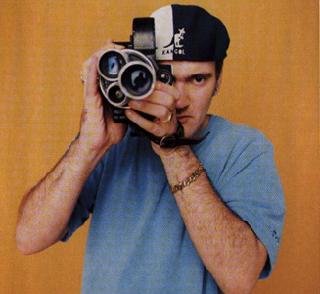
After much-too-long a wait, I finally got to see a movie this week by another prolific and challenging filmmaker, David Cronenberg, the Academy Award nominated "History of Violence." This Canadian writer and director earned his chops with a host of horror movies that remain as chilling and disturbing as they day they were released. From "Shivers" to "Rabid", "Scanners," "The Brood," "Videodrome," "The Fly, "The Dead Zone," and others, he consistently followed themes of nightmarish quality about intimacy, relationships, celebrity, and technology.
However, more of his recent efforts have been focused on characters and not nasty nightmares. In "Crash" and "Spider" his stories were made for maximum effect by exploring humanity or the lack of it, of the Outsiders who search for some kind of tentative cooperation with normalcy.

"A History of Violence" may be his masterwork. And as a true bonus, the commentary and behind-the-scene features on the DVD are worthy of great educational value to would-be filmmakers and those just curious as to how a movie is made and how artistic vision is brought to life. It's by far the most intelligent director commentary I've ever experienced via DVDs.
The story comes straight from the old John Wayne/Glenn Ford school of Heroics - the right to defend the Home and the Family. Expertly cast with Viggo Mortensen as a small-town owner of a diner and Maria Bello as his loving wife, their world is shattered when brutal criminals attempt to rob his diner and endanger his customers. In pure street brawl fashion, Viggo, as Tom Stall, kills the criminals. The town and the media hail him as a hero. Even his somewhat bullied son, Jack, gains admiration and inspiration from Tom's defense. And then a trio of ugly thugs arrive at Stall's Diner led by actor Ed Harris and casually accuse him of being just another mobster on the lam, that "Tom" is an impostor.
Cronenberg deftly restrains his style to create characters that seem both believable and doubtful at once. The violence escalates, and it always seems to be justified ... unless, perhaps, Tom isn't really Tom at all. And that doubt begins to rattle the All-American home of Tom and his wife to their foundations.
I won't reveal more, but in addition to the Academy Award nomination for supporting actor William Hurt, Viggo should have gotten a nomination as well. It also earned a nomination for Best Adapted Screenplay and many critics place the movie as one of the best of the 2005.
Worth mentioning too is the utterly wordless finale as Tom and his family sit down to dinner. It's one of the most powerful and emotional scenes I've seen in years.
Cronenberg's comments from the movie's web site (as well as the many unspoken themes in the movie itself) offer some insight into how carefully he crafted this work, how deeply involved the actors and tech crews were in collaborating to make this unique and impressive work. You'll want to watch it twice, perhaps more, especially after you hear Cronenberg's comments.
Violence can be justified - but can it be endured?
Oh and one more quickie here before I end - along with the fine folks at Atomic Tumor, the movie I most want to see in coming months is what appears to be a brilliant adaption of Phillip Dick's classic "A Scanner Darkly," filmed with a new style of real film and animation - check out the latest preview here.
Guns and Peanut Butter
The Tennessee Dept of Corrections issued a press release this week to announce they will ban jars of peanut butter for jail inmates. The story got some minor press coverage, though not one single reporter thought to ask to most important questions about this case.
The trouble, according to TDOC, is that inmates were using the 18 ounce containers to hide guns, drugs, cell phones, clothes, etc. In fact, last year's bloody jail escape and murderous shoot out enacted by George Hyatte in August occured after he used one-such smuggled cell phone to coordinate his deadly escape on his way to court in Knoxville with the aid of his girlfriend.
All press reports note that inmates purchased these large jars of peanut butter through a jail commissary. So, then, since inmates don't usually store guns, cell phones and drugs in their cells, SOMEONE had to put those items in the jars before they were purchased by inmates. SOMEONE in, say, a jail commissary -- but no word on corrective actions taken against the operations of a commissary. Just no more giant jars for the inmates. Currently TDOC says some 4,600 jars are in stock, but will be replaced .... soon.
The trouble, according to TDOC, is that inmates were using the 18 ounce containers to hide guns, drugs, cell phones, clothes, etc. In fact, last year's bloody jail escape and murderous shoot out enacted by George Hyatte in August occured after he used one-such smuggled cell phone to coordinate his deadly escape on his way to court in Knoxville with the aid of his girlfriend.
All press reports note that inmates purchased these large jars of peanut butter through a jail commissary. So, then, since inmates don't usually store guns, cell phones and drugs in their cells, SOMEONE had to put those items in the jars before they were purchased by inmates. SOMEONE in, say, a jail commissary -- but no word on corrective actions taken against the operations of a commissary. Just no more giant jars for the inmates. Currently TDOC says some 4,600 jars are in stock, but will be replaced .... soon.
Thursday, March 30, 2006
"Most Idiotic Song Ever" - NOT
Not to knock down a fellow-blogger, but Glen Dean's rant about a song he calls the most idiotic ever, the John Lennon tune, "Imagine", has me puzzled. Even in his comments section, which is properly filled with debate, Dean admits his fave band is the Grateful Dead, and as far as goofy lyrics go ... well, let's just call some of them goofy and leave it at that.
But I can of think of many other tunes to qualify as idiotic - "Sugar, Sugar" by the Archies or that "Mmm-bop" song by them little Hanson boys. And I personally find great irony that Dolly Parton's song about breaking off her ties with Porter Waggoner, "I WIll Always Love You", is now most often heard during a wedding.
But I digress.
Here's what Glen says:
"There has never been, nor will there ever be a song this idiotic. Every verse is stupid, but the final verse takes the cake.
But I can of think of many other tunes to qualify as idiotic - "Sugar, Sugar" by the Archies or that "Mmm-bop" song by them little Hanson boys. And I personally find great irony that Dolly Parton's song about breaking off her ties with Porter Waggoner, "I WIll Always Love You", is now most often heard during a wedding.
But I digress.
Here's what Glen says:
"There has never been, nor will there ever be a song this idiotic. Every verse is stupid, but the final verse takes the cake.
Imagine no possessions
I wonder if you can
No need for greed or hunger
A brotherhood of man
Imagine all the people
Sharing all the world...
Sounds like a typical fantasy for an egalitarian commie like Lennon, nothing to work for, nothing to stand up and fight for, nobody having any more than anybody else. After all, nobody deserves more. No wonder they played this song at the UN.
I don't understand why society made Lennon out to be some kind of peace activist. Peace has never been achieved by sitting around and imagining that there is no religion, no heaven or hell, and no bad people in the world. We are free today because of soldiers, sailors, and marines, men and women who sacrificed their lives so that we could live in peace. Freedom was fought for, not dreamed about."
Society did not make Lennon a peace activist - he did it himself, along with help from Yoko Ono - by expressing to the press in multiple interviews that he thought the Vietnam War was wrong and should end. He called in the international press on his honeymoon so they would report that he and his new bride were holding a "bed-in" to protest the war. The event was worldwide news. And then there was the song, "Give Peace A Chance" which he wrote intentionally as an anti-war anthem.
The US at the time labled him an "activist" and tried for years to keep him out of the country, especially since many millions of people were joining him in protesting the war. It was a case which the US goverment ultimately lost.
Sounds kinda like an "activist" to me.
And then there is that artistic metaphor of the tune itself - first, you have to be able to conceive, to imagine a world which you then work to make a reality through your actions. And history shows that from the sit-down strikes of Ghandi to the non-violent resistance of Martin Luther King Jr. that "sitting" and "stopping" can in fact cause revolutionary change.
And again, speaking personally, the song never expressed a rejection of religion or money, but rather an endorsement in the power of the individual to create a better world - a brotherhood created out of a realization that we can all change our lives for the better if we wish it and act to be inclusive and not divisive. It expresses to me that each person can do much to determine the reality of the world around us - but that action is preceded by vision, imagination, and viewing the world outside of the status quo.
Freedoms often must be fought for, sung about, talked about and I dare say the writers of the Declaration of Independence or the Constitution began by "imagining" a world where religion and government were not the authority of humans - that instead we are all Free to be self-determining.
As for "imagining" there were "no heaven or no hell" - to me that meant that we are accountable in this world first for the way we live. So perhaps the here and now is the place to begin making a better world, not out of fear of some future Judgement, but from a desire to make the world we live in more humane and compassionate.
And this post isn't meant to defame Dean - thank God he is Free to write as he wishes. And so am I.
Wednesday, March 29, 2006
The Missing Android and The Cellborg

Somewhere out in the world today is the head of a robot and no one is quite sure where it might be, and even stranger, the robot itself was based on the likeness of a man who often feared that he might one day be replaced by a robot which would be convinced that it was real and that the real man was a fake. In fact, much of the writings of the late Phillip K. Dick focused on the nature of reality and the rise of technology. The android created was "touring" the country and the head ... just ... went missing.
This tale was odd enough to begin with - the android's memory was loaded with the writings of PKD himself, so you could ask "it" questions and "it" would respond with PKD's own words. Biometric ID software allowed the fake PKD to recognize faces, interpret body language and expression which then led to the responses it gave to those who spoke to "it."
And now it's just ... out there, somewhere. Was it a planned escape? Is It pondering what to do next? It It writing It's first novel or short story? Is It plotting an organized android revolution? Makes me feel trapped in one of the original PKD's books.
Biological humans seem, as PKD predicted, to be searching for more and more ways to computerize their bodies. A new trend among 20-somethings is to buy a home kit and do self-implants so they can use their hands to interact with the world without touching anything. They call themselves "taggers" and use the implants to gain access to VIP clubs, use it open locked doors, as password protection for computer systems or add it to clothing so it emits light and link with GPS systems to keep them from getting lost, I suppose. Too bad no one put one such tracker in the missing robot head. And what happens if your implant also has your debit/credit card info - could you walk through a store, leave, and later find yourself charged for thousands of dollars in purchases simply by walking down an aisle filled with chip-filled goods??
At a recent conference on the ever-growing use of nanotechnology - structures made on the scale of atoms and molecules, for example a human hair is 100,000 nanometers wide - the Future looks paved with tiny nano-bots. These micro-machines are already at use in cosmetics, paint, fabrics, building materials, medicine and more. The U.S. government is expected to spend $6 billion on such research this year and the private sector likewise will spend about $6 billion on these products this year as well.
This week, researchers have announced success in fusing brain cells with computer chips that are about 1 millimeter square. Applications for medicine and business are immense - creating chips that utilize proteins and neurons to achieve their tiny nano-programs.
Also, it was announced this week that researchers have created what they call a "cellborg." It is the first success in blending micro-organisms with electronics. The new "cellborg" is acting a sensor to detect changes in humidity, but the applications include being able to detect gases or chemicals, which promises usage within medicine and security technology.
And earlier this month, the first ever NanoTech Consumer Products Inventory was made available to the public. Some 212 products are currently listed, and more are being added on a nearly daily basis, though not all items currently being used are offered to the public - yet. One nano researcher says:
"We are at the vanguard of discovering the endless benefits of nanotechnology for applications like targeted cancer treatments and more efficient solar cells. With this inventory, we also are learning that this technology is already being incorporated into our daily lives. It's on store shelves and being sold in every part of the world," said David Rejeski, director of the Project on Emerging Nanotechnologies, which is supported by The Pew Charitable Trusts."
I used to make a joke that I was waiting for what I called "The Media Patch" - a device I imagined would be about the size of a postage stamp, and would connect my brain to telephone service, computer and online access, television and radio. Guess I need to revise that to a simple tiny implant, which also includes all my financial and medical information -- though right now that would be "broke" and "feeling pretty good, but with a little paranoia about computer chips."
Tuesday, March 28, 2006
All Workers To Need Federal OK
Fundamental to all the debate about immigration reforms is one underlying theme - which political party can collect the most votes during the 2006 election. A candidate wants to appeal to those opposed to making illegal immigrants felons, unless they want to appeal to voters who want more criminalization for illegals. And new immigrants and first and second generation immigrants are eyeing which party supports them and which does not. To paraphrase, it's about the voters, stupid. Not about reform.
And for all the hoopla around loving or hating the proposed bill from last year in the House, I see little discussion about a fundamental change affecting every worker and would-be worker in the nation. The bill would demand a federal database of all potential workers and demand employers use that database or risk federal anger. Everyone would have to obtain, in essence, a federal "permission slip" to obtain a job, immigrant or not.
Or to put it another way:
"The legislation would create a sea-change in federal employment rules by requiring all workers in the country to obtain a federal agencyÂ’s permission to work. All employers would be required to participate in a national employment eligibility verification program in an expansion of the faulty but voluntary "Basic Pilot" program in current law. Like Basic Pilot, the new program would use an Internet-based system to check the names and social security numbers of all employees -- citizens and non-citizen alike -- against a Department of Homeland Security database.
And for all the hoopla around loving or hating the proposed bill from last year in the House, I see little discussion about a fundamental change affecting every worker and would-be worker in the nation. The bill would demand a federal database of all potential workers and demand employers use that database or risk federal anger. Everyone would have to obtain, in essence, a federal "permission slip" to obtain a job, immigrant or not.
Or to put it another way:
"The legislation would create a sea-change in federal employment rules by requiring all workers in the country to obtain a federal agencyÂ’s permission to work. All employers would be required to participate in a national employment eligibility verification program in an expansion of the faulty but voluntary "Basic Pilot" program in current law. Like Basic Pilot, the new program would use an Internet-based system to check the names and social security numbers of all employees -- citizens and non-citizen alike -- against a Department of Homeland Security database.
The ACLU said that such a move would place a huge burden on both employers and workers. The non-partisan Government Accountability Office reported that conservative estimates of implementing such a system would cost at least $11.7 billion annually, a large share of which would be shouldered by businesses. Also, even assuming a near-perfect accuracy rate in the program, millions of legal, eligible American workers could still have their right to work seriously delayed or denied --fighting bureaucratic red tape to keep a job and pay bills. The U.S. Chamber of Commerce and other business organizations have expressed strong reservations with the employment verification provisions."
Another Manufacturing Job Loss In Morristown
The much-troubled furniture manufacturing industry in Morristown continues to decline as the former Shelby Williams Industries, now called Commercial Furniture Inc., has dropped another 100 jobs. This follows the loss of 200 jobs announced last fall, according to an article today in the Knoxville News Sentinel.
Some 30 or more years ago, furniture makers were an anchor industry here, but in the last decade or more, the jobs have left for overseas operations and falling production.
Some 30 or more years ago, furniture makers were an anchor industry here, but in the last decade or more, the jobs have left for overseas operations and falling production.
Monday, March 27, 2006
Will Your Job Last?
Economic concerns are driving the debate behind immigration reform on most serious levels, with the notion arising, finally, that illegals lower overall wages - which benefit employers. And it isn't just the arrival of immigrants that threaten American workers, but the exodous of jobs.
How many millions of US jobs will fly overseas in the next five to ten years? 56 million?
How many millions of US jobs will fly overseas in the next five to ten years? 56 million?
Sunday, March 26, 2006
From What I've Read
I've realized that in addition to the links I offer on this page, I should also from time to time provide some links to other blogs and posts which I read. I enjoy roaming the blog world and reading all types of opinions and info and news, and hope you enjoy this Sunday roundup. Click away!
- On all the anger from the Right.
- Does Barbara Bush profit from donations to Katrina Aid?
- Some local views on the Immigration debate.
- Do not change eminent domain laws. Or maybe we should.
- Some cool gadgets. And the Cool Hunters home.
- Goodbye and RIP to the creator of the Bakersfield Sound, Buck Owens.
- The Big Cheese.
- On all the anger from the Right.
- Does Barbara Bush profit from donations to Katrina Aid?
- Some local views on the Immigration debate.
- Do not change eminent domain laws. Or maybe we should.
- Some cool gadgets. And the Cool Hunters home.
- Goodbye and RIP to the creator of the Bakersfield Sound, Buck Owens.
- The Big Cheese.
Saturday, March 25, 2006
Is God Angry With Britain?
It was inevitable I suppose, with battles and bombs raging in the Middle East, that God Himself would seek out the international press to sound off on His views. And He did just that recently in this article:
"The archangel reported that the Almighty has become increasingly irritated with the vogue for politicians to claim that He is behind their policies - especially if these involve killing large numbers of humans"
Even here in the U.S., the President had to deal with questions and or fears concerning the Apocalypse.
"The archangel reported that the Almighty has become increasingly irritated with the vogue for politicians to claim that He is behind their policies - especially if these involve killing large numbers of humans"
Even here in the U.S., the President had to deal with questions and or fears concerning the Apocalypse.
Subscriber Service Back In Action - Get Yours!!
For subscribers to this blog, you'll get better service now that I've dropped Bloglet and am using FEEDblitz instead. Bloglet just up and quit working, emails to them came back as undeliverable, so I punted them. A search revealed more bloggers were happy with FEEDblitz, so I'm trying them out. Please let me know if you have any problems with this new service and I thank you for signing up - if you haven't it's easy!!! Just sign up on the form in the links section here!
Friday, March 24, 2006
Camera Obscura - Weapon of Choice
Every now and then a performer in today's nano-fast, modern now-a-go-go world makes hits decade after decade in almost every realm of entertainment - movies, TV, stage, music and books. You know today's subject and I bet you'll even know some lines he's made or that certain movies which were made better just because he was there. That's called Star Power. And his Legend says he's a performer who never turns down a part. Any part.
He'll turn 63 next week, on March 31st, but I don't expect him to stop anytime soon.
I remember some other actor once referred to him as a "reed thin, hyper-intensive guy" and that sort of sums him up pretty well. He can make a villian be funny in the creepiest ways. Sometimes, his haircut is frightening.
He earned an Oscar for "The Deer Hunter" in 1978 and his lanky funky dancing got him an MTV music award in 2001 and "Saturday Night Live" has an open invite for him to host whenever he wishes. One of my personal favorite moments is the "watch speech" he gives in "Pulp Fiction" where he mentions the watch was bought in Knoxville - without a doubt, Christopher Walken can do it all.

I guess it was it his dancing though, that made him stand out to me. I was one of the few hundred in 1981 who bothered to watch, much less enjoy the Steve Martin-starring movie "Pennies From Heaven." His tap-dancing scene in the pool hall was inspired madness.
Also in '81, he starred in the underrated "Dogs of War", where he and three other guys take over an entire country. Reading his movie credits and his bio, you'll find about 90 movies under his belt, comedies, animation, horror and mystery and action and drama. He started at 10 in a skit with Jerry Lewis and was in last year's huge hit "The Wedding Crashers." His career just keeps growing.
Worth mentioning here is the Web hoax that has Walken as a presidential candidate for 2008, and his growing fame as a music producer in a "Saturday Night Live" skit where he keeps yelling "More cowbell!!!" as the band Blue Oyster Cult records the song "Don't Fear The Reaper."
But for sheer joy and wild fun, it's hard to beat his dancing in the Spike Jonze directed video for Fatboy Slim's "Weapon of Choice," which he choreographed and nabbed that MTV award. I'm including the video today via YouTube for you to watch, but you'll get a crisper and cleaner copy of the video by going here.
Fred Astaire may have danced on the walls, but Chris flies.
He'll turn 63 next week, on March 31st, but I don't expect him to stop anytime soon.
I remember some other actor once referred to him as a "reed thin, hyper-intensive guy" and that sort of sums him up pretty well. He can make a villian be funny in the creepiest ways. Sometimes, his haircut is frightening.
He earned an Oscar for "The Deer Hunter" in 1978 and his lanky funky dancing got him an MTV music award in 2001 and "Saturday Night Live" has an open invite for him to host whenever he wishes. One of my personal favorite moments is the "watch speech" he gives in "Pulp Fiction" where he mentions the watch was bought in Knoxville - without a doubt, Christopher Walken can do it all.
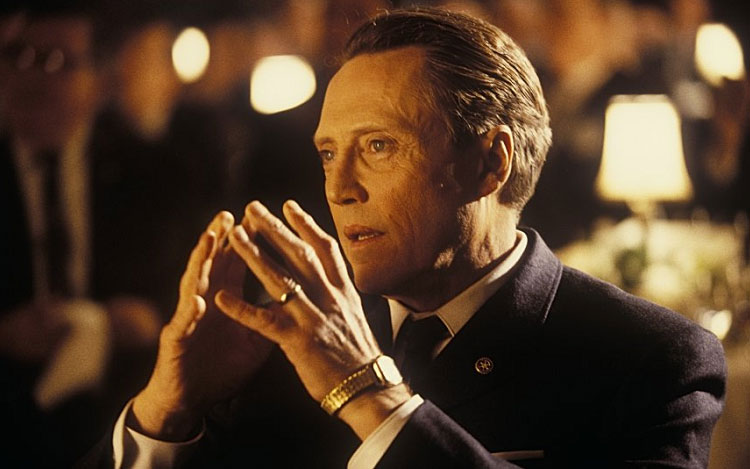
I guess it was it his dancing though, that made him stand out to me. I was one of the few hundred in 1981 who bothered to watch, much less enjoy the Steve Martin-starring movie "Pennies From Heaven." His tap-dancing scene in the pool hall was inspired madness.
Also in '81, he starred in the underrated "Dogs of War", where he and three other guys take over an entire country. Reading his movie credits and his bio, you'll find about 90 movies under his belt, comedies, animation, horror and mystery and action and drama. He started at 10 in a skit with Jerry Lewis and was in last year's huge hit "The Wedding Crashers." His career just keeps growing.
Worth mentioning here is the Web hoax that has Walken as a presidential candidate for 2008, and his growing fame as a music producer in a "Saturday Night Live" skit where he keeps yelling "More cowbell!!!" as the band Blue Oyster Cult records the song "Don't Fear The Reaper."
But for sheer joy and wild fun, it's hard to beat his dancing in the Spike Jonze directed video for Fatboy Slim's "Weapon of Choice," which he choreographed and nabbed that MTV award. I'm including the video today via YouTube for you to watch, but you'll get a crisper and cleaner copy of the video by going here.
Fred Astaire may have danced on the walls, but Chris flies.
Thursday, March 23, 2006
How Much for Gas? or The Summer Blend Mystery
Back in the end of February I was paying $1.99 a gallon for gas and yesterday the price was $2.45. And of course, the price hike arrives as the "Spring Break" season begins, and this morning I see a report from AAA talking about the oil company's mandated changeover to "summer blend" gas.
Yes, the headlines and AAA say it - Summer Blend drives Price Hike.
What the heck is a summer blend and a winter blend?
Being an internet fiend, I Google the phrase. And the "summer blend" was mandated by the EPA back in 2001 by the President's Energy Policy, even found this nifty press release from the EPA which says this new "boutique" of clean fuel programs will "benefit consumers." Then head of the agency, Christie Whitman said:
"I am concerned that when supplies fall short, due to increased demand or pipeline disruptions, the gasoline prices increase dramatically, as we saw this past summer. EPA requires the use of summer blend fuels to minimize air pollution during the hot summer months. While many factors contributed to the gasoline price spikes this year, we want to ensure that using summer blend fuel is not a contributor to price hikes.
Hmmm. Turns out each state has their own laws and requirements about what fuel should be used in different times of the year - the aforementioned "boutique" - means about 100 different types of summer blends are made. And much of the info is several years old, back when a barrel of crude was less than $30.
So the more I find out, the more confused the information becomes. It all seems to contradict, which also seems to be a trend regarding information and bureaucracy. Gas station owners hate the price hike they say, drivers hate it more, and as Yoda might say "Helpless we all are."
Last week while driving, I decided to tune in to the mindless ravings of Rush Limbaugh. It's good to know what the crazies are thinking. And he's complaining about people who complain about the record multi-billion dollar profits that all the oil companies have been reporting. The fat idiot says if people really want to find something to complain about, it's the rise of property taxes over the last 10 or 15 years, and that if the "average American" understood how that problem has grown then they would take to the streets in masses.
What?
Then I recall how R.L. is a master of the ol' bait-and-switch. Never answer the issue at hand, bring up another one and claim the Evil is there.
The bottom line is oil companies always have an excuse - seasonal changes, clean air laws, Venezuela, Iraq, OPEC, hurricanes, China, natural gas, state gas taxes, yadda yadda yadda. You darned Americans just want everything - adequate supplies, reinvestment of profits, efficient combustion, war, peace, cable TV and better grades fer the kids in school. The reply to your endless need is: Someone has to pay for it. And for the attorneys.
Yes, the headlines and AAA say it - Summer Blend drives Price Hike.
What the heck is a summer blend and a winter blend?
Being an internet fiend, I Google the phrase. And the "summer blend" was mandated by the EPA back in 2001 by the President's Energy Policy, even found this nifty press release from the EPA which says this new "boutique" of clean fuel programs will "benefit consumers." Then head of the agency, Christie Whitman said:
"I am concerned that when supplies fall short, due to increased demand or pipeline disruptions, the gasoline prices increase dramatically, as we saw this past summer. EPA requires the use of summer blend fuels to minimize air pollution during the hot summer months. While many factors contributed to the gasoline price spikes this year, we want to ensure that using summer blend fuel is not a contributor to price hikes.
Hmmm. Turns out each state has their own laws and requirements about what fuel should be used in different times of the year - the aforementioned "boutique" - means about 100 different types of summer blends are made. And much of the info is several years old, back when a barrel of crude was less than $30.
So the more I find out, the more confused the information becomes. It all seems to contradict, which also seems to be a trend regarding information and bureaucracy. Gas station owners hate the price hike they say, drivers hate it more, and as Yoda might say "Helpless we all are."
Last week while driving, I decided to tune in to the mindless ravings of Rush Limbaugh. It's good to know what the crazies are thinking. And he's complaining about people who complain about the record multi-billion dollar profits that all the oil companies have been reporting. The fat idiot says if people really want to find something to complain about, it's the rise of property taxes over the last 10 or 15 years, and that if the "average American" understood how that problem has grown then they would take to the streets in masses.
What?
Then I recall how R.L. is a master of the ol' bait-and-switch. Never answer the issue at hand, bring up another one and claim the Evil is there.
The bottom line is oil companies always have an excuse - seasonal changes, clean air laws, Venezuela, Iraq, OPEC, hurricanes, China, natural gas, state gas taxes, yadda yadda yadda. You darned Americans just want everything - adequate supplies, reinvestment of profits, efficient combustion, war, peace, cable TV and better grades fer the kids in school. The reply to your endless need is: Someone has to pay for it. And for the attorneys.
Wednesday, March 22, 2006
TN Hospitals Join 'Typo' Lawsuit
I mentioned last week that people were beginning to question whether or not a law signed by President Bush was actually a law or a collection of Constitutional violations. As of last Friday, 15 Tennessee hospitals joined with those who want the $39 billion deficit-reduction Act reviewed or repealed, calling it "unconstitutional", according to this report in The Hill.
The hospitals, which have been battling with the Health and Human Services agency for 10 years over billing issues, won $100 million lawsuit against HHS in September of last year - but the day after the President signed this "new law", HHS filed a motion to alter the court's judgement against them.
The confusion is growing faster than kudzu in summertime - and the HHS motion made Sen. Frist angry, according to the story:
"In addition to prompting a legal response that could obliterate a $39 billion spending-reduction bill, the HHS motion to overturn that decision attracted the ire of Senate Majority Leader Bill Frist (R-Tenn.) and the entire Tennessee delegation.
The hospitals, which have been battling with the Health and Human Services agency for 10 years over billing issues, won $100 million lawsuit against HHS in September of last year - but the day after the President signed this "new law", HHS filed a motion to alter the court's judgement against them.
The confusion is growing faster than kudzu in summertime - and the HHS motion made Sen. Frist angry, according to the story:
"In addition to prompting a legal response that could obliterate a $39 billion spending-reduction bill, the HHS motion to overturn that decision attracted the ire of Senate Majority Leader Bill Frist (R-Tenn.) and the entire Tennessee delegation.
Frist and his colleagues wrote to HHS Secretary Mike Leavitt and Attorney General Alberto Gonzales on March 10 to complain about the government’s motion.
“We request further explanation of what we believe to be a serious miscommunication by [Medicare representatives],” the lawmakers wrote."
Patents on Thought - UPDATE
According to some the questions from Supreme Court members yesterday, much doubt is being cast on the notion that patents can be applied to thought. It's really obvious the answer should be "No."
Justice Stephen Breyer noted that a Yes vote on this issue would create "monopolies in this country beyond belief," and Justice Scalia repeatedly asked "What was made by man here?" during the arguments in the case. More on the arguments made are here.
While there are a world of definitions regarding copyright, trademarks and patents, I have been seeing some dangerous trends in all these areas and my beliefs about copyrights themselves have changed greatly over the last few years.
As someone who has scraped by earning tiny amounts of money for writing, I used to be hold a firm belief that creators and inventors needed copyright protections in order to earn an income and protect the integrity of their creations. Yet as corporations have swallowed up the ideas of others, the ramifications of ownership and earnings changed, so my perspectives have changed.
Unfathomable changes have occured in the modern age - as I noted in the previous post, concerning owning the patents on thought, and of course the issues file sharing and downloading music and video have brought on heated debates and court cases taking action against individuals by the ever-growing rights extended to corporations.
Another recent madness emerged as Marvel Comics and DC Comcis continue to prevent the commercial use of their trademark to the term Super-Hero. It's a word, and yes, a concept, but this legal claim by Marvel and DC is madness.
Wrestling with these ideas, I went back to the still-revolutionary writings of our U.S. Constitution, where in Article One, Section 8 it states:
"To promote the progress of science and useful arts, by securing for limited times to authors and inventors the exclusive right to their respective writings and discoveries ..."
Previous history to this document reveals hundreds of years of Western Civilization aiming to control the use and spread of information. So, it is little wonder the writers of the Constitution were specific in their phrasing -- that law should promote science and arts for limited times. After that time has passed, writings and discoveries were meant to become part of the public's domain.
The writers wisely held the belief that information and ideas need to ultimately be free and easily accesible to all citizens. It's an idea I also have embraced. God knows the more free and open access to all types of information will "promote progress."
A brilliant and well researched article "The Erosion of Public Protection: Attacks On The Concept of Free Use" traces the history of the copyright issue.
Justice Stephen Breyer noted that a Yes vote on this issue would create "monopolies in this country beyond belief," and Justice Scalia repeatedly asked "What was made by man here?" during the arguments in the case. More on the arguments made are here.
While there are a world of definitions regarding copyright, trademarks and patents, I have been seeing some dangerous trends in all these areas and my beliefs about copyrights themselves have changed greatly over the last few years.
As someone who has scraped by earning tiny amounts of money for writing, I used to be hold a firm belief that creators and inventors needed copyright protections in order to earn an income and protect the integrity of their creations. Yet as corporations have swallowed up the ideas of others, the ramifications of ownership and earnings changed, so my perspectives have changed.
Unfathomable changes have occured in the modern age - as I noted in the previous post, concerning owning the patents on thought, and of course the issues file sharing and downloading music and video have brought on heated debates and court cases taking action against individuals by the ever-growing rights extended to corporations.
Another recent madness emerged as Marvel Comics and DC Comcis continue to prevent the commercial use of their trademark to the term Super-Hero. It's a word, and yes, a concept, but this legal claim by Marvel and DC is madness.
Wrestling with these ideas, I went back to the still-revolutionary writings of our U.S. Constitution, where in Article One, Section 8 it states:
"To promote the progress of science and useful arts, by securing for limited times to authors and inventors the exclusive right to their respective writings and discoveries ..."
Previous history to this document reveals hundreds of years of Western Civilization aiming to control the use and spread of information. So, it is little wonder the writers of the Constitution were specific in their phrasing -- that law should promote science and arts for limited times. After that time has passed, writings and discoveries were meant to become part of the public's domain.
The writers wisely held the belief that information and ideas need to ultimately be free and easily accesible to all citizens. It's an idea I also have embraced. God knows the more free and open access to all types of information will "promote progress."
A brilliant and well researched article "The Erosion of Public Protection: Attacks On The Concept of Free Use" traces the history of the copyright issue.
Monday, March 20, 2006
Supreme Court Considers Patents on Thought
On Tuesday of this week the Supreme Court takes up an odd case involving patent rights, and one of the key issues concerns how factual information might make a person "think", and how such reflection and thought could violate the patent. Kinda makes my head hurt to ponder this case,
In short, a company called Metabolite owns the license for a patent on a medical test for homocysteine, an amino acid in the blood, and further, the patent includes the basic biological relationship between this amino acid and vitamin deficiency. Another company, LabCorp, uses a different medical test, but has published information mentioning the the "patented fact" about the biology involved. So far, courts have backed Metabolite on the patent infringement of "thinking" about this fact.
Yeah, OK....
In an essay by Michael Chrichton in the NYTimes, he notes some things I plain did not know and I hope I'm not breaking the law by thinking about this or writing about it:
"For example, the human genome exists in every one of us, and is therefore our shared heritage and an undoubted fact of nature. Nevertheless 20 percent of the genome is now privately owned. The gene for diabetes is owned, and its owner has something to say about any research you do, and what it will cost you. The entire genome of the hepatitis C virus is owned by a biotech company. Royalty costs now influence the direction of research in basic diseases, and often even the testing for diseases. Such barriers to medical testing and research are not in the public interest. Do you want to be told by your doctor, "Oh, nobody studies your disease any more because the owner of the gene/enzyme/correlation has made it too expensive to do research?"
"The question of whether basic truths of nature can be owned ought not to be confused with concerns about how we pay for biotech development, whether we will have drugs in the future, and so on. If you invent a new test, you may patent it and sell it for as much as you can, if that's your goal. Companies can certainly own a test they have invented. But they should not own the disease itself, or the gene that causes the disease, or essential underlying facts about the disease."
One example which Chrichton notes is that Einstein did not own the patent on his mathematical theory of the speed of light being constant. But what if he had? What if Newton owned a patent on the idea of gravity? If so, then researchers would have to pay royalties for thinking about them and experimentation based on those ideas.
And that, dear readers, is my concern - is it truly feasible to demand royalties on what you might think about the facts and theories of the natural world and how they relate to each other?
Oh, and there is the already disturbing (to me) law that allows for someone to "own" segments of the Human Genome.
In short, a company called Metabolite owns the license for a patent on a medical test for homocysteine, an amino acid in the blood, and further, the patent includes the basic biological relationship between this amino acid and vitamin deficiency. Another company, LabCorp, uses a different medical test, but has published information mentioning the the "patented fact" about the biology involved. So far, courts have backed Metabolite on the patent infringement of "thinking" about this fact.
Yeah, OK....
In an essay by Michael Chrichton in the NYTimes, he notes some things I plain did not know and I hope I'm not breaking the law by thinking about this or writing about it:
"For example, the human genome exists in every one of us, and is therefore our shared heritage and an undoubted fact of nature. Nevertheless 20 percent of the genome is now privately owned. The gene for diabetes is owned, and its owner has something to say about any research you do, and what it will cost you. The entire genome of the hepatitis C virus is owned by a biotech company. Royalty costs now influence the direction of research in basic diseases, and often even the testing for diseases. Such barriers to medical testing and research are not in the public interest. Do you want to be told by your doctor, "Oh, nobody studies your disease any more because the owner of the gene/enzyme/correlation has made it too expensive to do research?"
"The question of whether basic truths of nature can be owned ought not to be confused with concerns about how we pay for biotech development, whether we will have drugs in the future, and so on. If you invent a new test, you may patent it and sell it for as much as you can, if that's your goal. Companies can certainly own a test they have invented. But they should not own the disease itself, or the gene that causes the disease, or essential underlying facts about the disease."
One example which Chrichton notes is that Einstein did not own the patent on his mathematical theory of the speed of light being constant. But what if he had? What if Newton owned a patent on the idea of gravity? If so, then researchers would have to pay royalties for thinking about them and experimentation based on those ideas.
And that, dear readers, is my concern - is it truly feasible to demand royalties on what you might think about the facts and theories of the natural world and how they relate to each other?
Oh, and there is the already disturbing (to me) law that allows for someone to "own" segments of the Human Genome.
Sunday, March 19, 2006
Patriot Act - The Board Game
What happens when you blend the game of Monopoly with the so-called "Patriot" Act?
You get a board game where the object is to be the last player to retain any Civil Liberties.
Instead of landing on say, Oriental Avenue, you land on color-coded terror alert sites, and get Homeland Security cards instead of Chance cards. And you don't Go To Jail - you go to Gitmo.
Read more here. (Note the story refers to the "inventor" of the game as an "artists" and "activist". (and hat-tip to the Rodeo Monkey for the story)
Next oddity of the day arrived via Cherokee Sage Woman. Police raid a near-full blown factory manufacturing snack foods made of marijuana - complete with names like "Pot Tarts" and "Buddhafingers."
And one more - the Las Vegas artist who found his BBQ chicken made him the "Rodney King of Chicken."
You get a board game where the object is to be the last player to retain any Civil Liberties.
Instead of landing on say, Oriental Avenue, you land on color-coded terror alert sites, and get Homeland Security cards instead of Chance cards. And you don't Go To Jail - you go to Gitmo.
Read more here. (Note the story refers to the "inventor" of the game as an "artists" and "activist". (and hat-tip to the Rodeo Monkey for the story)
Next oddity of the day arrived via Cherokee Sage Woman. Police raid a near-full blown factory manufacturing snack foods made of marijuana - complete with names like "Pot Tarts" and "Buddhafingers."
And one more - the Las Vegas artist who found his BBQ chicken made him the "Rodney King of Chicken."
Saturday, March 18, 2006
Wal-Mart Says No To Legislation And TennCare's 1st Annual Report
The state legislature is facing a battle with Wal-Mart over dollars mandated by government to be spent on health insurance. Some 33 other states are also considering similar legislative action, which would require that a company with 10,000-plus employees to pay 10 peccent of their gross payroll toward health care - either directly to workers or to a state-led health care fund, according to reports.
Wal-Mart is lobbying against it, saying it's an unfair "union tactic" though supporters note that about 25 percent of Wal-Mart employees are TennCare recepients, the largest percentage of any company in the state.
Other than Wal-Mart, the other companies that would be affected include FedEx, Kroger and Vanderbilt. The article makes interesting reading.
The state is continuing to track down fraud and abuse of TennCare - something the Bredesen administration demanded and previous Gov Sunquist avoided. But they've also made it easy for anyone to report fraud and abuse of TennCare.
The first-ever annual report of TennCare is available at the state's website and has these comments:
"This is the first time the Bureau has produced a report that very clearly spells out to the taxpayers how the program works and how their tax dollars are being spent in the TennCare program,” said TennCare Director, Dr. J.D. Hickey. “As the single largest component of the state’s overall budget, we felt compelled to produce this report and believe it will be a useful tool in better understanding the TennCare program and thechanges we’ve made during the past year.”
"The Annual Report chronicles TennCare’s efforts to rein in program finances by implementing dozens of pharmacy utilization control measures, expanding drug purchasing power, launching five statewide disease management programs and aggressively managing the program to return the program to financial stability. Statistics on the TennCare population, county-by-county enrollment breakdowns and funding source breakouts with actual expenditures and growth percentages are highlighted in the report for quick reference."
You can report suspected TennCare fraud by calling 1-800-433-3982 toll-free from anywhere in Tennessee, or log on to www.tenncarefraud.tennessee.gov
Wal-Mart is lobbying against it, saying it's an unfair "union tactic" though supporters note that about 25 percent of Wal-Mart employees are TennCare recepients, the largest percentage of any company in the state.
Other than Wal-Mart, the other companies that would be affected include FedEx, Kroger and Vanderbilt. The article makes interesting reading.
The state is continuing to track down fraud and abuse of TennCare - something the Bredesen administration demanded and previous Gov Sunquist avoided. But they've also made it easy for anyone to report fraud and abuse of TennCare.
The first-ever annual report of TennCare is available at the state's website and has these comments:
"This is the first time the Bureau has produced a report that very clearly spells out to the taxpayers how the program works and how their tax dollars are being spent in the TennCare program,” said TennCare Director, Dr. J.D. Hickey. “As the single largest component of the state’s overall budget, we felt compelled to produce this report and believe it will be a useful tool in better understanding the TennCare program and thechanges we’ve made during the past year.”
"The Annual Report chronicles TennCare’s efforts to rein in program finances by implementing dozens of pharmacy utilization control measures, expanding drug purchasing power, launching five statewide disease management programs and aggressively managing the program to return the program to financial stability. Statistics on the TennCare population, county-by-county enrollment breakdowns and funding source breakouts with actual expenditures and growth percentages are highlighted in the report for quick reference."
You can report suspected TennCare fraud by calling 1-800-433-3982 toll-free from anywhere in Tennessee, or log on to www.tenncarefraud.tennessee.gov
Friday, March 17, 2006
Camera Obscura - Alan Moore's Vendetta
The mainstream world is about to encounter what readers around the Western world read and thought about the rise of the Ronald Reagan years, though now re-told as the Neo-Conservative battle playing out in today's political world in the new move release "V for Vendetta." The writer and creator of the original 12 issue comic book series Alan Moore, has, once again, had his name removed from this film based on his work which was published in 1988.
Moore has given up rights to his works already made into film - "Constantine," "From Hell," "League of Extraordinary Gentlemen". He still writes intriguing tales in the comics and remains a most unusual character. A recent interview has these comments about "V for Vendetta":
"As far I'm concerned, the two poles of politics were not Left Wing or Right Wing. In fact they're just two ways of ordering an industrial society and we're fast moving beyond the industrial societies of the 19th and 20th centuries. It seemed to me the two more absolute extremes were anarchy and fascism. This was one of the things I objected to in the recent film, where it seems to be, from the script that I read, sort of recasting it as current American neo-conservatism vs. current American liberalism. There wasn't a mention of anarchy as far as I could see. The fascism had been completely defanged."
I had been reading Moore's award-winning work thru the late 1980s on "Swamp Thing" and "Miracleman", just prior to the release of the astonishing masterpiece called "The Watchmen." More on that later (and please, God, don't let them ever make a movie of it). It was in late summer in 1990 in a small apartment in Brooklyn where I ran across the V for Vendetta series.
The character of V takes action not so much for some Moral Code - it's more that he wants to destabilize the status quo, encourage the individual to establish self-determining skills, and ultimately the reader has much to wonder as to whether V is just an insane anarchist, a tortured artist or just the presence of non-conformity.
In 1990s Manhattan, riots had raged in Bensonhurst and Times Square was still home to porn theatres and crime - as opposed to its role today as a sleek and clean place to see the latest Walt Disney Broadway musical. The rap band Public Enemy was playing Radio Center under heavy police security and economic ravages of trickled-on-and-down Reaganism left a funky sense of smoldering rage through the city. I remember seeing stretches of the Brooklyn Bridge marked with graffiti which read "Yuppicide".
To the movie's credit, I understand there's more actual dialog than just action - but we'll see. The film itself is dedicated to the memory of the late, great cinematographer Adrian Biddle who died in Dec. 2005. And it stands to reason to stake out the story with the current political debate noting single-party government and morality versus ... well, reviewers have referred to "liberalism", but I see little of that in America and more concerns of maintaining the Bill of Rights. But that's another post.
First in V for Vendetta and later in "The Watchmen" Moore presents the idea that someone, with or without some super-hero power, who dons a mask and takes the law into his or her own hands is -- well, a little crazy, isn't it? And his epic graphic novel, "The Watchmen," Moore provides a leftover collection of deeply disturbed superheroes enacting their vision for humanity which isn't really very sane. There are many levels of storytelling here and all brilliantly presented - in my opinion, it's the pinnacle of storytelling in comic books and nothing has reached beyond it since it first came out in the late 1980s. The ideas there have been picked up in Hollywood and anime and television ever since. Moore seems content to just continue writing as he wishes.
In some other movie/comics news, writer Mike Mignola and director Guillermo del Toro are teaming together again for a sequel to the highly underrated "Hellboy" movie. For my money, it's the best adaption of a comic book to movie I've ever seen. Rumors also claim the director is being wooed to take the lead for the movie adaption of the videogame "Halo."
And as of this morning, I read that actor Benicio del Toro has signed on to play The Wolf-Man in a new Universal movie.
And so far, I've been most impressed with the new Tuesday night TV series "The Unit" created by Pulitzer Prize-winning playwright David Mamet -- someone called it "Desperate Housewives Meets G.I. Joe", but it's much better than that. It follows a group of covert-ops military agents and their wives, but the lingo is realistic and each episode stands alone - you don't have to follow a season-long storyline to keep up with it.
Moore has given up rights to his works already made into film - "Constantine," "From Hell," "League of Extraordinary Gentlemen". He still writes intriguing tales in the comics and remains a most unusual character. A recent interview has these comments about "V for Vendetta":
"As far I'm concerned, the two poles of politics were not Left Wing or Right Wing. In fact they're just two ways of ordering an industrial society and we're fast moving beyond the industrial societies of the 19th and 20th centuries. It seemed to me the two more absolute extremes were anarchy and fascism. This was one of the things I objected to in the recent film, where it seems to be, from the script that I read, sort of recasting it as current American neo-conservatism vs. current American liberalism. There wasn't a mention of anarchy as far as I could see. The fascism had been completely defanged."
I had been reading Moore's award-winning work thru the late 1980s on "Swamp Thing" and "Miracleman", just prior to the release of the astonishing masterpiece called "The Watchmen." More on that later (and please, God, don't let them ever make a movie of it). It was in late summer in 1990 in a small apartment in Brooklyn where I ran across the V for Vendetta series.
The character of V takes action not so much for some Moral Code - it's more that he wants to destabilize the status quo, encourage the individual to establish self-determining skills, and ultimately the reader has much to wonder as to whether V is just an insane anarchist, a tortured artist or just the presence of non-conformity.
In 1990s Manhattan, riots had raged in Bensonhurst and Times Square was still home to porn theatres and crime - as opposed to its role today as a sleek and clean place to see the latest Walt Disney Broadway musical. The rap band Public Enemy was playing Radio Center under heavy police security and economic ravages of trickled-on-and-down Reaganism left a funky sense of smoldering rage through the city. I remember seeing stretches of the Brooklyn Bridge marked with graffiti which read "Yuppicide".
To the movie's credit, I understand there's more actual dialog than just action - but we'll see. The film itself is dedicated to the memory of the late, great cinematographer Adrian Biddle who died in Dec. 2005. And it stands to reason to stake out the story with the current political debate noting single-party government and morality versus ... well, reviewers have referred to "liberalism", but I see little of that in America and more concerns of maintaining the Bill of Rights. But that's another post.
First in V for Vendetta and later in "The Watchmen" Moore presents the idea that someone, with or without some super-hero power, who dons a mask and takes the law into his or her own hands is -- well, a little crazy, isn't it? And his epic graphic novel, "The Watchmen," Moore provides a leftover collection of deeply disturbed superheroes enacting their vision for humanity which isn't really very sane. There are many levels of storytelling here and all brilliantly presented - in my opinion, it's the pinnacle of storytelling in comic books and nothing has reached beyond it since it first came out in the late 1980s. The ideas there have been picked up in Hollywood and anime and television ever since. Moore seems content to just continue writing as he wishes.
In some other movie/comics news, writer Mike Mignola and director Guillermo del Toro are teaming together again for a sequel to the highly underrated "Hellboy" movie. For my money, it's the best adaption of a comic book to movie I've ever seen. Rumors also claim the director is being wooed to take the lead for the movie adaption of the videogame "Halo."
And as of this morning, I read that actor Benicio del Toro has signed on to play The Wolf-Man in a new Universal movie.
And so far, I've been most impressed with the new Tuesday night TV series "The Unit" created by Pulitzer Prize-winning playwright David Mamet -- someone called it "Desperate Housewives Meets G.I. Joe", but it's much better than that. It follows a group of covert-ops military agents and their wives, but the lingo is realistic and each episode stands alone - you don't have to follow a season-long storyline to keep up with it.
Thursday, March 16, 2006
$2 Billion And A Law Which Isn't Legal
A two billion dollar federal typo about how long oxygen used in home should be paid by Medicare; the vice-president has to fly in to make the tie-breaking vote; House and Senate bills that don't match, but which is made into law with the signature of the President.
But what if none of this is legal?
But what if none of this is legal?
Subscribe to:
Posts (Atom)